
Badge Kids › Road Badge › Section 1 › Lesson 1.1
All courses›Road Badge›Section 1
Fit to ride, before you touch the machine
Run the four rider questions out loud before you touch the machine, and say what you actually do on an evening when one of the answers is no.
1Watch
The four seconds by the back door
The four seconds by the back door
A rider at the end of a long day picks a helmet off a hook, half turns towards the machine leaning against the wall, and stops; the frame freezes with the helmet still in one hand.
18 secondsNothing has gone wrong and nobody has done anything yet. That pause is the whole lesson, and most riders never take it.
2The idea
Every course in the world starts here, and none of them start with the bike
The UK national cycle training standard writes its very first criterion before the bike is touched at all: recognise if I am able to ride independently or require assistance. Adult motorcycle training gives the same ground a whole unit of its own and calls it Rider Impairments.
So this is not an add-on and it is not a mood check. In every established programme, the rider is item one on the list and the machine is item two. We have simply put them in the order that everybody who teaches riding already uses.
3The idea
Four questions, and you answer them out loud
Standing next to the machine, hands off it.
Am I awake enough for this?
Am I ill, or hurt?
Am I level — not furious, not upset, not in a rush?
Have I got what I need on me — helmet, hands free, lights if it will be dark before I am back?
A no is information, not a verdict. It does not mean you are a bad rider or that somebody is going to make a thing of it. It means one of the four inputs to the next twenty minutes has changed, and you now know which one before you are moving.
4Look
Same rider, two evenings
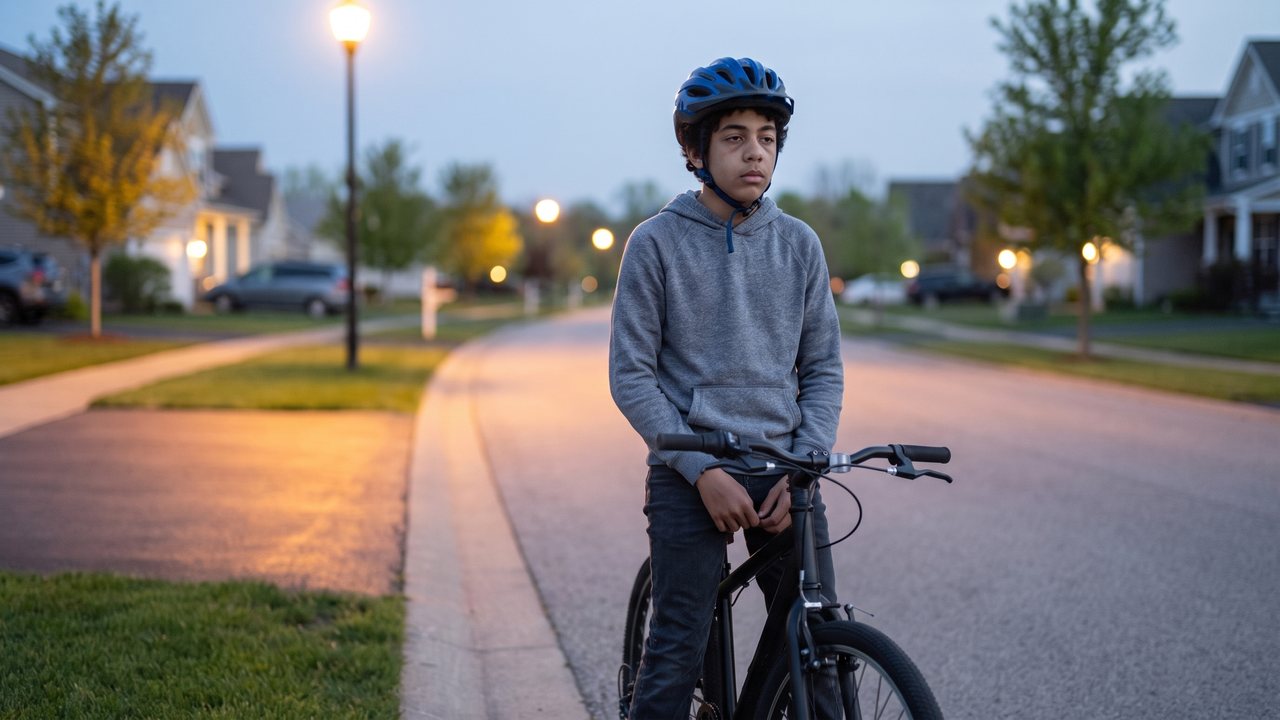
Same machine, same street, same distance. One of those two is about to make decisions half a second slower than the other and will not be able to tell from inside.
5Decide
You got about four hours of sleep. It is a route you have ridden a hundred times.
Pick one to carry on.
6The idea
What a no costs, which is less than you think
The options are boring and all of them work. Push it. Walk it and come back tomorrow. Ask for a lift. Go in an hour. The training standard writes this into the criterion itself — able to ride independently or require assistance — because asking is one of the two correct answers.
The only expensive version of a no is the one you never said. Nobody has ever been embarrassed for long about walking a machine home. The alternative story is longer and other people end up in it.
7Say it
The sentence for the evening it is a no
Say it out loud, in your normal voice
“I'm not right for this tonight. I'll walk it.”
Say it once now, while nothing is happening. A sentence your mouth has already made comes out flat and finished, and nobody argues with a flat sentence.
8Find them
Which of these belong in the rider check?
Tap the ones that count.
Find all 4.
9Your turn
Six evenings
Six evenings
Six one-line evenings appear one at a time – a late night, a cold coming on, a row before you left, a rush to be somewhere, a normal Tuesday, a dark ride home you had not planned for. Tap which of the four questions each one is really answering no to. Two of the six are a yes on all four.
The two that come back clean matter as much as the four that do not. This check is meant to pass most nights.
10Do it
Before you leave this page
Go and stand next to your machine with your hands off it, and answer the four out loud with somebody in earshot: awake, well, level, kitted. Then touch it. That is the order from now on.
Tick it when you have done it.
Lesson done.
The rider gets checked before the bike does. Four questions, out loud, before your hands are on it.
Next lesson: The helmet