
Two proposals, for your yes or no
Eight of your ten Day Two items are built and live. These are the other two. Neither exists anywhere in your 2017 course, so neither is your material — which means neither goes into the course until you say so. Here is what each one would be, so you can judge it rather than imagine it.
Secrets, surprises and privacy
You asked for “a novel and effective way to teach this.” Here is the idea in one line: a child cannot follow the rule “don’t keep unsafe secrets” until they can tell three things apart that all feel like keeping quiet.
| What it is | How you can tell | |
|---|---|---|
| A surprise | Mom’s birthday cake hidden in the garage | It ends. Everybody finds out. Everybody is happy. |
| An unsafe secret | “Let’s keep this between you and me” | It never ends. One person must never find out. Your stomach feels wrong. |
| Privacy | Getting changed with the door shut | It is yours. You can always tell a trusted adult about it — it is not a secret at all. |
How it would be taught. Not by reading the table above. By sorting. The child drags each thing into one of three bins and finds out immediately whether they were right and why. Try it — this is working, not a mockup:
Working demo — tap a card, then tap a bin
Surprise
Everyone finds out. Everyone is happy.
Unsafe secret
Somebody must never find out.
Privacy
Yours. You can still tell an adult.
The man looking for his lost puppy
You asked: “Do a scenario with a man looking for his lost puppy. The man asks Brandon to go with him to go look for the puppy. Can Fernando write an appropriate and short dialogue for this trust meter activity?” Here it is. Read it and change any line you want changed — then it gets filmed.
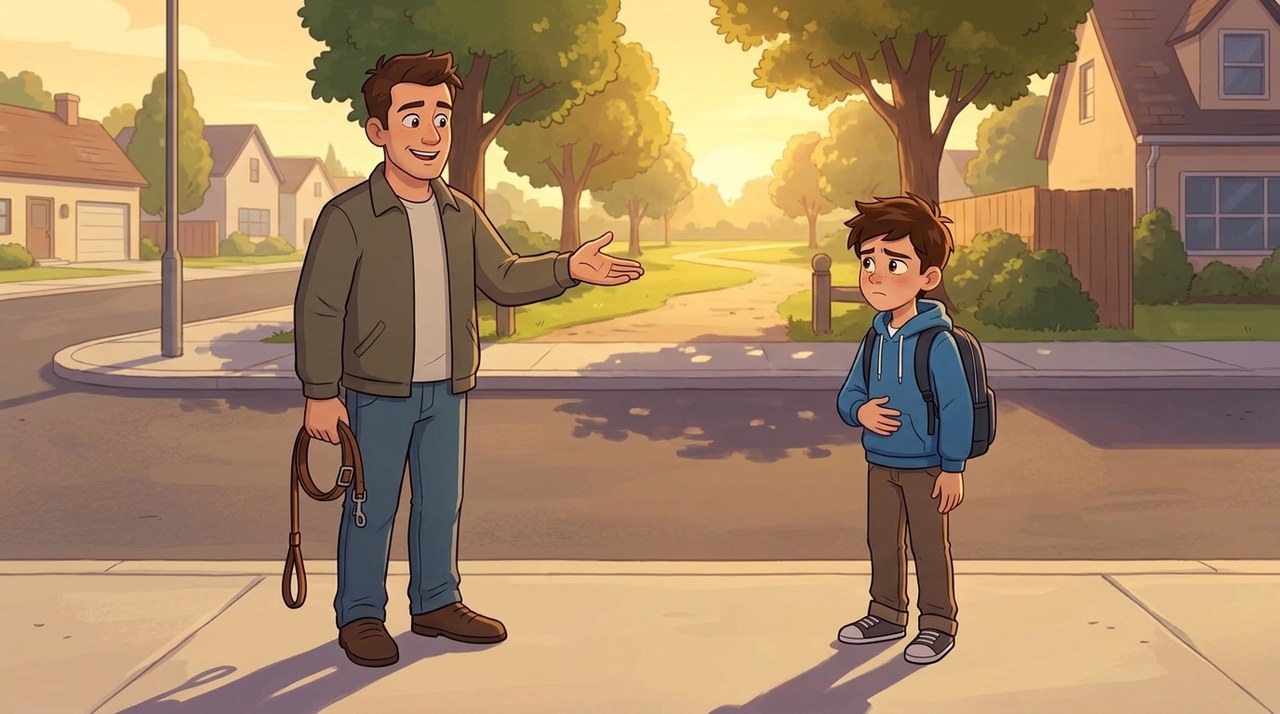
The dialogue. Brandon is walking home from school. A man he has never seen before is standing on the pavement holding an empty leash.
- Man: “Hey — sorry to bother you. Have you seen a little brown puppy? He slipped his collar about ten minutes ago.”
- Brandon: “No, sorry.”
- Man: “He ran off toward the park. He’s only small — he’ll come to a kid before he’ll come to me. Would you come and help me look? Two minutes, honestly.”
- Brandon: “I should ask my mom first.”
- Man: “There’s no time, he’s heading for the road. Come on — you’d be doing me such a big favour.”
What Brandon is thinking — the four thoughts, in your existing format:
- “A puppy might really be lost. I’d want someone to help me.”
- “He’s got a leash, so he really has a dog.”
- “He wants me to go with him, and he says there’s no time to ask.”
- “A grown-up is asking a kid for help, and he doesn’t want me to check first. That’s two of the six rules at once.”
Do you trust this person? The answer is no — and not because of the puppy. Because of two of your own rules: rule 2, adults should ask other adults for help, not kids; and rule 1, check first with an adult in charge. The hurry is the tell. A real emergency still lets you make one phone call.
The guidance, in your existing words: “Listen to your trust meter. Ignore the stranger. Walk away. Yell if you feel threatened. Tell an adult you trust. If you can, get a description of the stranger.”