
What are you riding?
Road Badge › Know Your Machine › What are you riding?
What are you riding?
Three questions that work everywhere.
1Two bikes in the same rack
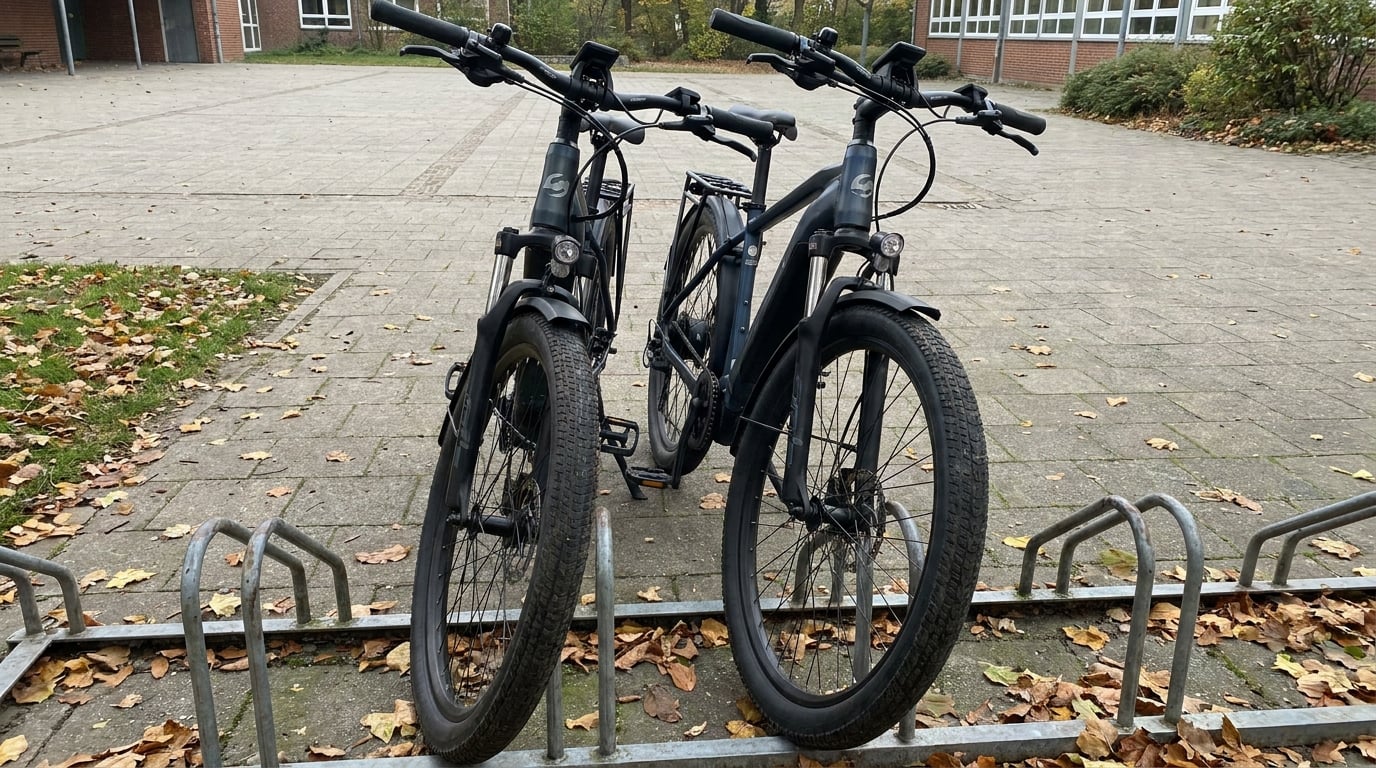
Two e-bikes are leaning in a school rack. Same shape, same wheels, same sort of price. On the frame of each there is a small label, and the numbers on them are very different.
Those two are completely different machines as far as every rule is concerned, and the only thing that says so is about the size of a stamp.
2Why we are not going to teach you a class number
Plenty of courses open by teaching you Class 1, 2 and 3. We are not, for a plain reason: no Canadian province or territory uses those class numbers in law at all, and in the United States they are not the same everywhere. A class number is a local word, and this machine crosses borders.
Most places sort these machines into classes, and they mostly ask the same three things — whether the motor helps only while you are pedalling, whether there is a throttle that moves you without pedalling, and the speed at which the motor stops helping. The names and the numbers move around from place to place. So the class printed on the box is worth reading once and is not worth memorising. What you carry around in your head has to work anywhere, so it is three questions about the machine itself instead.
3The three questions
How many watts is the motor?
What speed does the assist cut out at?
Does it have working pedals you could ride it with the power off?
Every rule in either country is built out of those three answers. Power, cut-out speed, and whether it is still a bicycle when the battery is flat. A rider who can answer all three can work out where they stand anywhere they go. A rider who knows a class number knows one word, true in one place.
4Where the three answers live
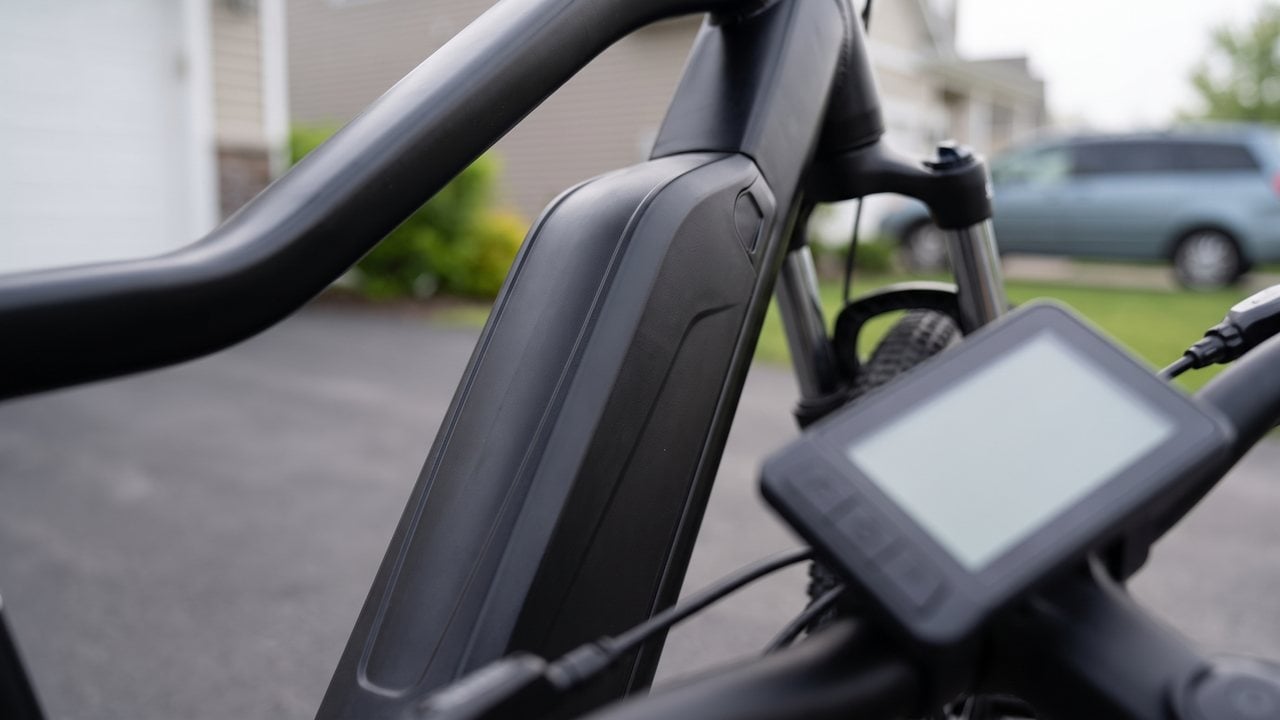
Most machines carry the first one. Nearly all carry the second. The display is the least reliable of the three, because a display can be changed and a moulded label cannot.
5No label on it, and no manual anywhere.
Pick one.
Yes. No answer is itself an answer. A machine with nothing written on it is a home build, a gray import, or something that was never sold as an e-bike in the first place. The next stop is the maker's own specifications, and after that the person who bought it, because none of the questions in this section can be answered without those three numbers.
Careful with both of those. Assuming makes you the only person in the story who does not know what you are riding, and timing it yourself tells you what it did today on that road, not what the motor is rated at. The power figure in particular cannot be measured with a stopwatch, and it is the one most of the rules hang off.
6What the three answers actually buy you
A legal e-bike is not a motor vehicle: no license, no registration, no insurance. In the United States, 28 mph is the ceiling for anything still legally a bicycle — over that line it is a moped or a motorcycle, with the licensing that goes with those. Wherever categories exist, the fastest one is the restricted one.
And nearly everywhere sets a minimum age for the faster machines, usually somewhere between fourteen and sixteen. Wherever the number lands, it is a floor, not an opinion about how well you ride. The machine has its three answers and you have an age, and either they match or they do not.
7Four machines
Four machines appear one at a time with a label, a manual page or a display. Answer the three questions for each. The card then tells you what each machine is called in three different places — two US states and one province — using the same three answers you just gave.
The fourth one has nothing readable on it anywhere. That is deliberate, and it is the most common one of the four.
8Which of these tell you what you ride?
Pick every one that is right, then press Check.
Find all 3.
Three answers, all of them on the machine itself. That is what you are riding.
Three of those are somebody's opinion. A website, a friend and a paint job tell you nothing.
9Three words, in order
Say it out loud, in your normal voice
Watts, cut-out, pedals.
Those three words are the whole test. Say them and you will remember which three things to go and look for, in a store, in a friend's garage, or in front of somebody asking you what you are riding.
10Before you leave this page
Answer the three about your own machine.
Go and answer the three on your own machine, out loud, with somebody listening: the watts, the cut-out speed, and whether the pedals drive it with the power off. Write the three answers somewhere you will find them again. If one of them is missing, say which one and tell whoever bought the machine.