
Riding when you are not right
Road Badge › Fit to Ride › Riding when you are not right
Riding when you are not right
Not right is a condition. It has a way home.
1The last twenty minutes of a long day
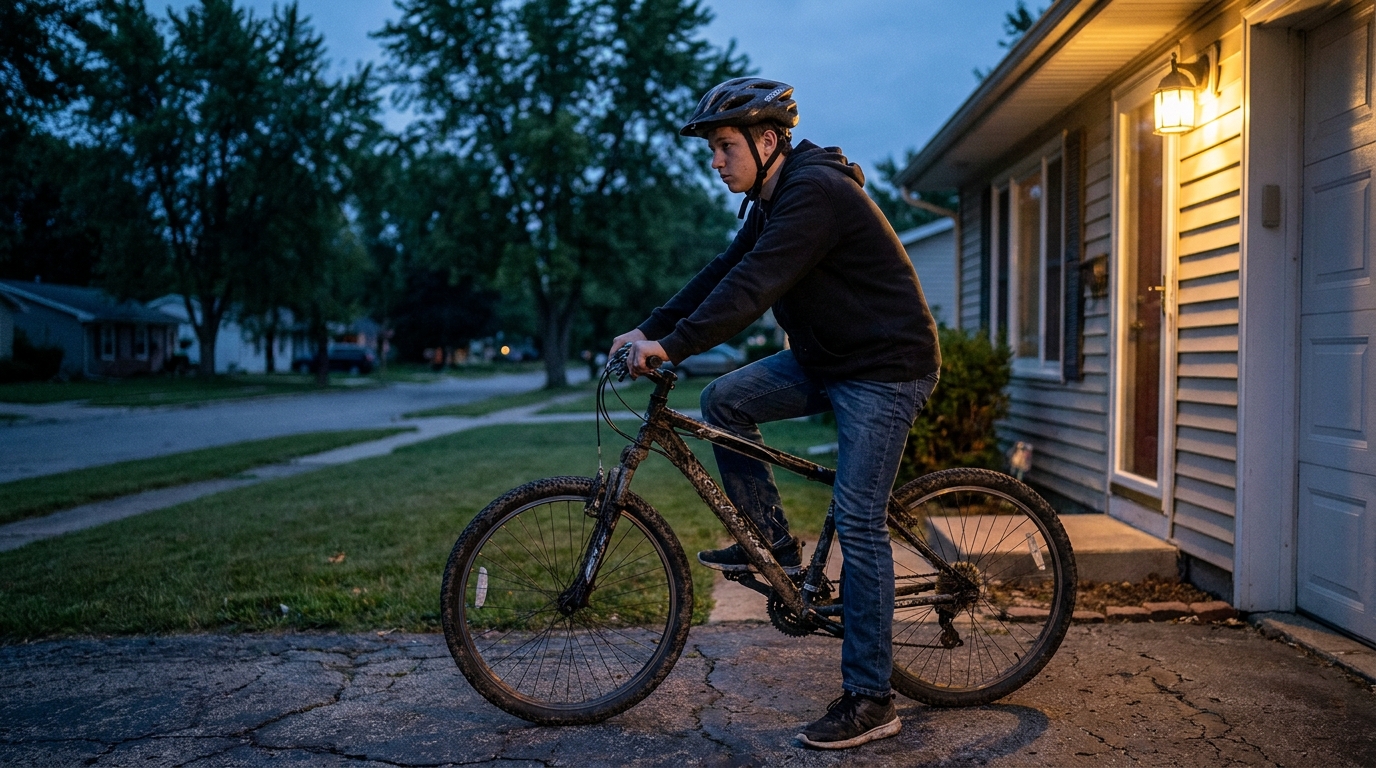
It is late. You are stopped outside a friend's house with one foot down, helmet on, looking down the road home.
This is the most ordinary moment in the whole badge, and it decides more than the junctions do. You are tired, and tired is a thing you cannot feel from the inside.
2Impairment has its own unit, next to cornering
The adult motorcycle course does not tuck this in at the end as a warning. It gives it a numbered unit of its own called Rider Impairments, in the same list as the braking and the turning, and it examines you on it.
That is the framing we are using too. Being unfit to ride tonight is not a moral event. It is a condition of the rider, exactly the same kind of thing as a soft brake lever is a condition of the machine, and you deal with it the same unbothered way.
3Five conditions
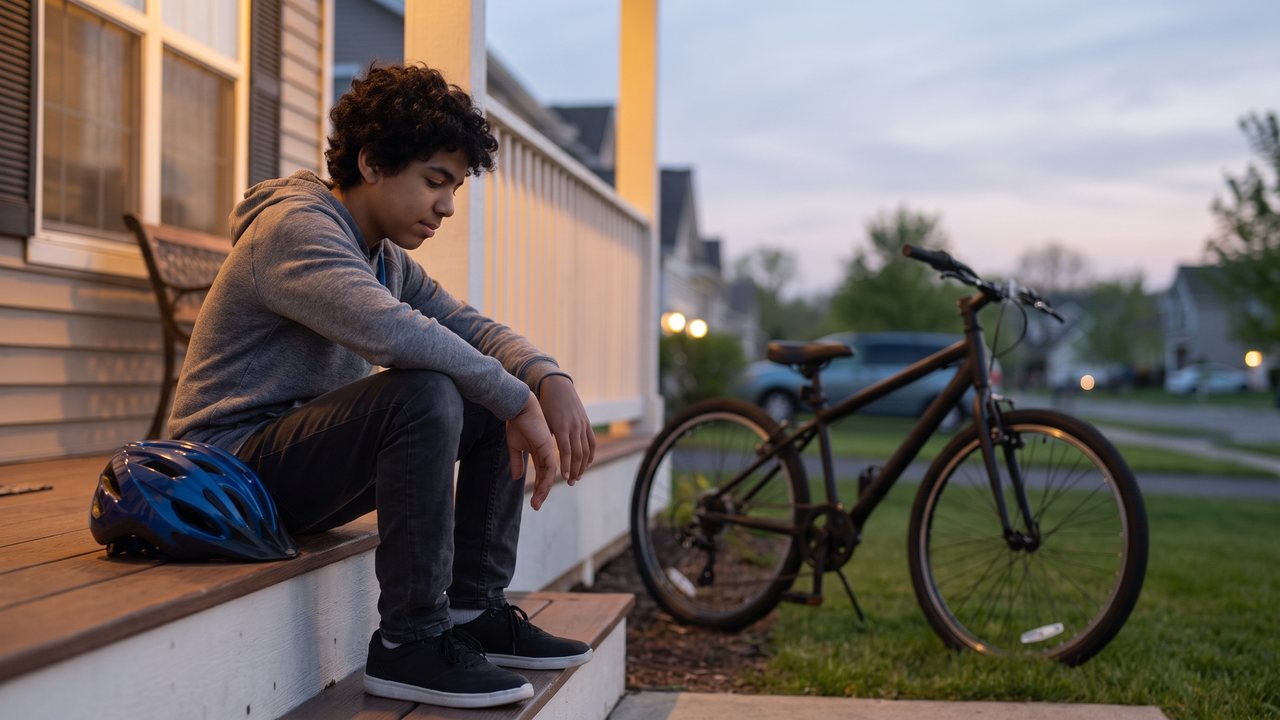
Remember:“A condition is not a character. It is over by tomorrow.”
Tired. Ill or hurt. Upset or angry. In a rush. Anything you have taken that changes how you think.
None of those five are permanent and none of them are about who you are. Every one of them is over by tomorrow.
4The five, and what each one takes off you
Tired — the deciding half of every stop gets longer.
Ill or hurt — your hands and your balance are not the ones you practiced with.
Upset or angry — the gap from the last lesson gets wider.
In a rush — you spend the margins you built on purpose.
Anything you have taken that changes how you think.
Each one of those makes you slower at the exact job the road is about to give you. Not clumsier, not worse as a person. Slower at deciding, which the last lesson showed you comes out as feet of road.
5Up since five, dark, twenty minutes home.
Pick one.
Yes, and notice what it cost. One message, one slightly annoying morning, and the machine is still there. The training standard writes this as one of the two correct answers to its first question — able to ride independently, or require assistance. Asking is inside the standard, not outside it.
Both of those keep you on the machine, which is the part that changed. A quieter route does not give you back reaction time, and a break by the curb does not fix being awake since five. The thing to change tonight is the rider, and the only way to change the rider is to stop being one for a few hours.
6The one nobody says out loud
In one hospital series of e-bike and scooter riders, about one in five tested positive for alcohol, and those riders had worse brain injuries and had worn helmets less. Nationally, alcohol was involved in thirty-four per cent of fatal pedalcyclist crashes in 2020 — on one side or the other.
Read the last part of that again: on one side or the other. Some of those were the driver. So this is two rules, not one. Do not ride it yourself, and ride the late evening on the assumption that somebody out there is not right either.
7Four ways home
Build your own list. Pick from walk it, push it, lock it and come back, ask a named adult, ask a named friend, public transport, and stay put and wait it out. The card asks you which two you would actually use at eleven at night, and who the named person is.
The point is having two you would genuinely use, not seven you would not.
8Which of these mean you are not riding it tonight?
Pick every one that is right, then press Check.
Find all 4.
Four nights that are a no. Notice that all four are about you, not the weather.
Two of those are inconvenient, not dangerous. Cold and late are not reasons to stay off.
9The ask, which is the whole skill
Say it out loud, in your normal voice
I'm not riding it back tonight. Can you come and get me?
That sentence is much easier at eleven at night if it has been said once at four in the afternoon, in a kitchen, with nobody upset. Say it now so it is not new later.
10Before you leave this page
Pick two ways home, and one person to call.
Work out tonight your two ways home that do not involve riding, and the one person you would call. Then go and tell that person they are the one, and check they are happy to be. Two minutes, and it never has to be invented at eleven at night.