
Check the rider first
Road Badge › Fit to Ride › Check the rider first
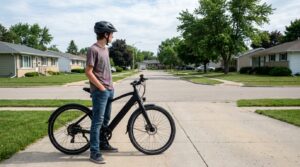
Check the rider first
Four questions before you touch the bike.
1Stop before you touch your bike
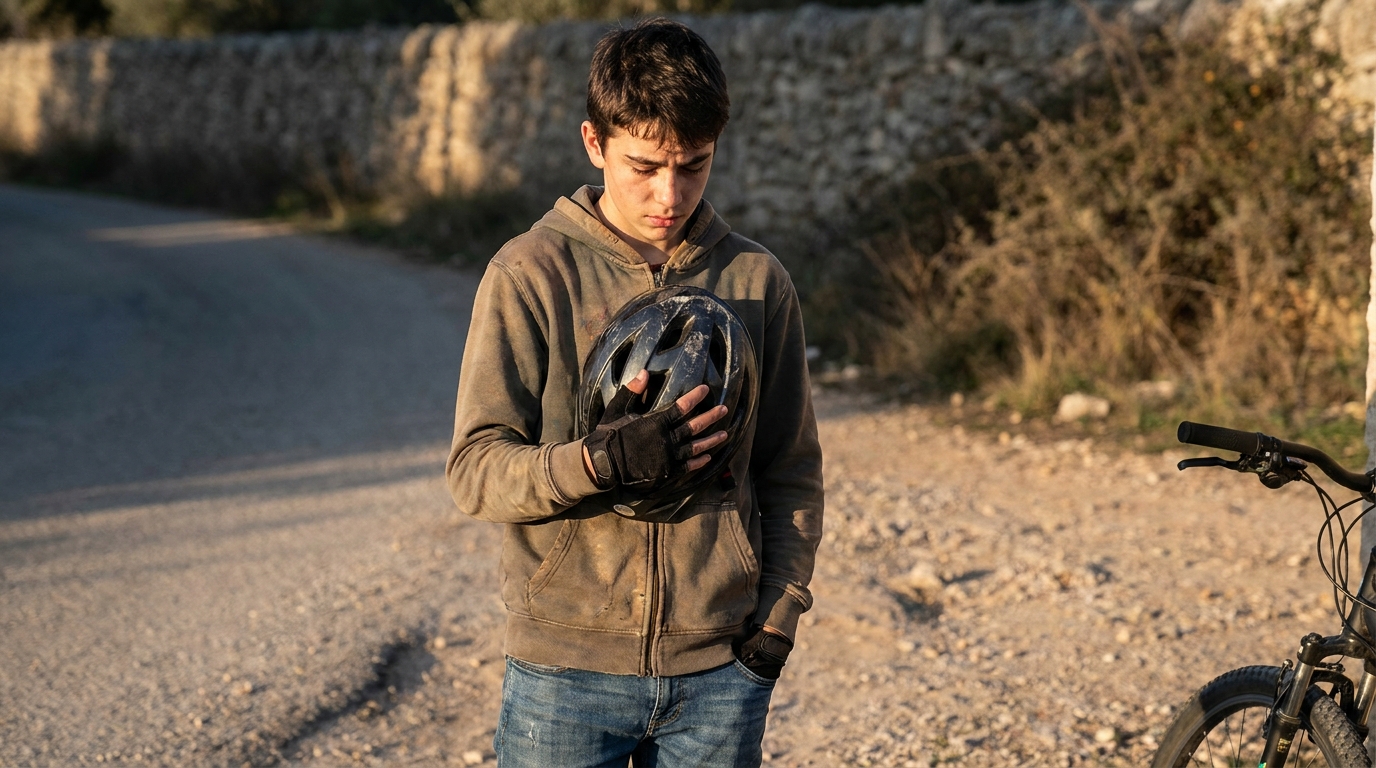
Remember:“Four seconds. Ask first, then touch the bike.”
You have had a long day. You grab your helmet off the hook and head for your bike. Right there, before your hand touches it, you have about four seconds.
Most riders walk straight through those four seconds. They never notice them. They are riding before they ever decided to ride.
This lesson teaches you to stop in those four seconds and ask yourself four questions.
When do the four seconds happen?
2Who gets checked first, you or your bike?
Pick one.
Right. You come first. Your bike comes second. Every riding school teaches it in that order.
Other way round. You come first, then your bike.
3The four questions
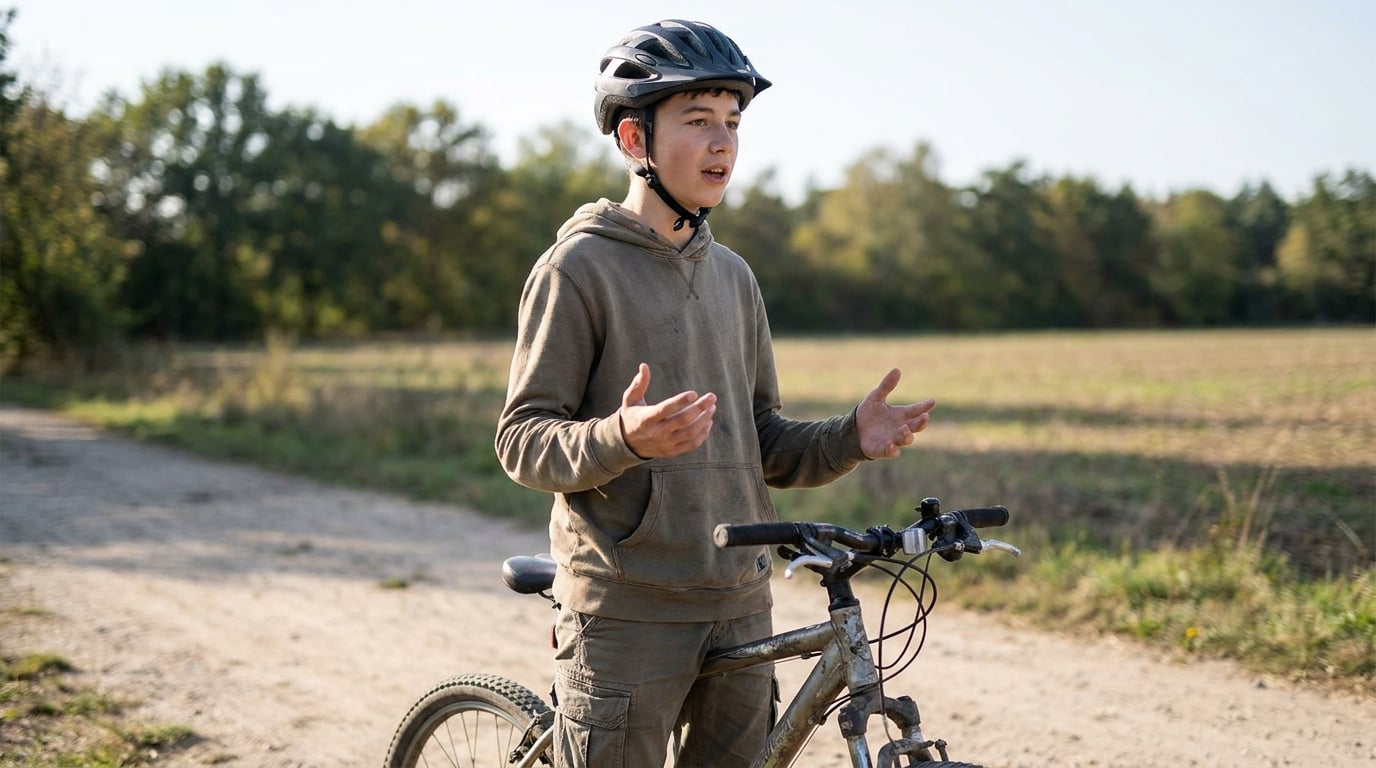
Remember:“Say them out loud. In your head they all blur together.”
Stand next to your bike. Keep your hands off it. Say these four out loud:
Am I awake enough? Am I sick or hurt? Am I calm, not angry and not in a rush? Do I have my helmet, my hands free, and lights if it gets dark?
Saying them out loud matters. In your head all four blur into one feeling, and the feeling is always yes. Out loud, you hear which one is a no.
It takes about eight seconds. Your hands stay off the bike the whole time. That feels strange for about a week, and then it stops feeling strange.
Out loud, or in your head?
4The same rider on two nights
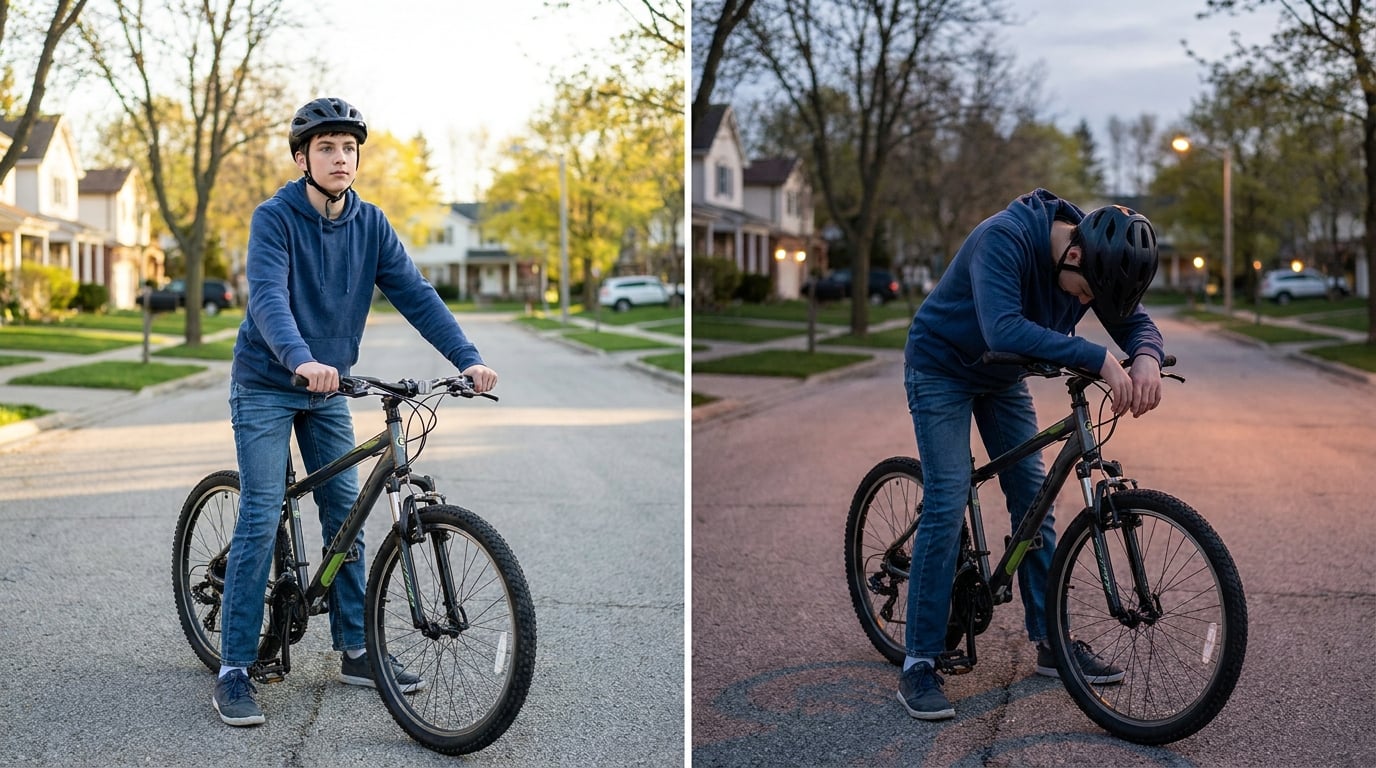
Remember:“Tired does not feel like tired. That is why you ask.”
Same bike. Same street. Same ride home. Two different nights.
On one of these nights he reacts about half a second slower. Half a second is all you get when a car door swings open or a dog runs out.
Here is the hard part. He cannot feel the difference. Being tired does not feel like being tired. It feels normal, just a little further away.
So the check is four questions you say out loud. It is not a feeling, because the feeling is the thing that is broken.
Can you feel it when you are too tired to ride?
5You know the route but you only slept four hours
Pick one.
Right. The road did not change. You did.
Look again. The road is the same as last week. You are the part that changed.
6Saying no is cheap
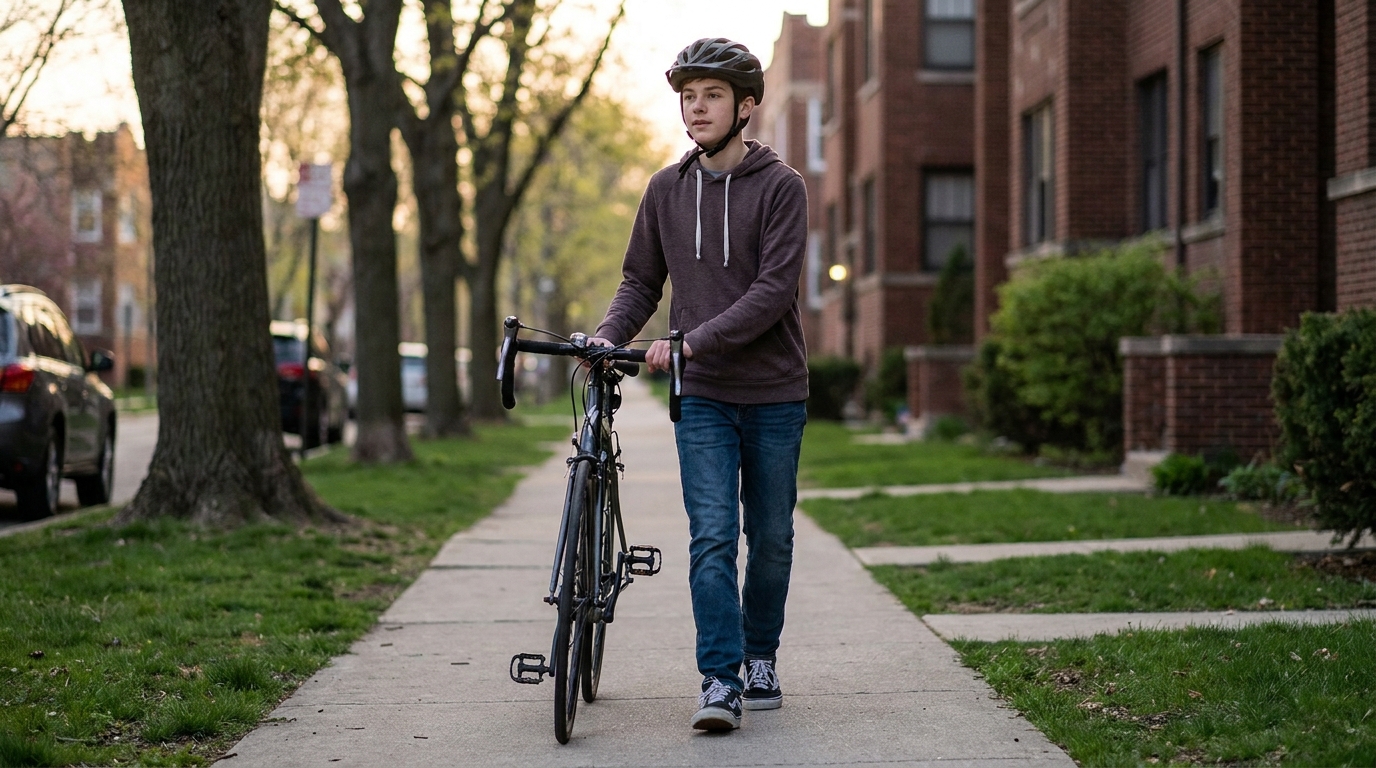
Remember:“Walking home is boring. That is the whole point.”
Walk the bike. Go tomorrow. Ask for a ride. Wait an hour. All of these work, and all of them are boring.
A no is not a punishment. It does not mean you are a bad rider. It means one of your four answers changed, and you found out before you started riding.
The expensive no is the one you never said.
Which of these is NOT a way to say no?
7Practice the sentence now
Why now:“A sentence you have already said comes out calm.”
Say this out loud
I am not right tonight. I am walking it.
Say it once now, while nothing is wrong. A sentence you have already said comes out calm, and people do not argue with a calm sentence.
8Which of these are part of checking yourself?
Pick every one that is right, then press Check.
Four of these are about you. Two are about your bike.
That is the check. Four questions about you, every time.
Two of those are about the bike. Your bike gets its own check later.
9Six nights. Which ones are a no?
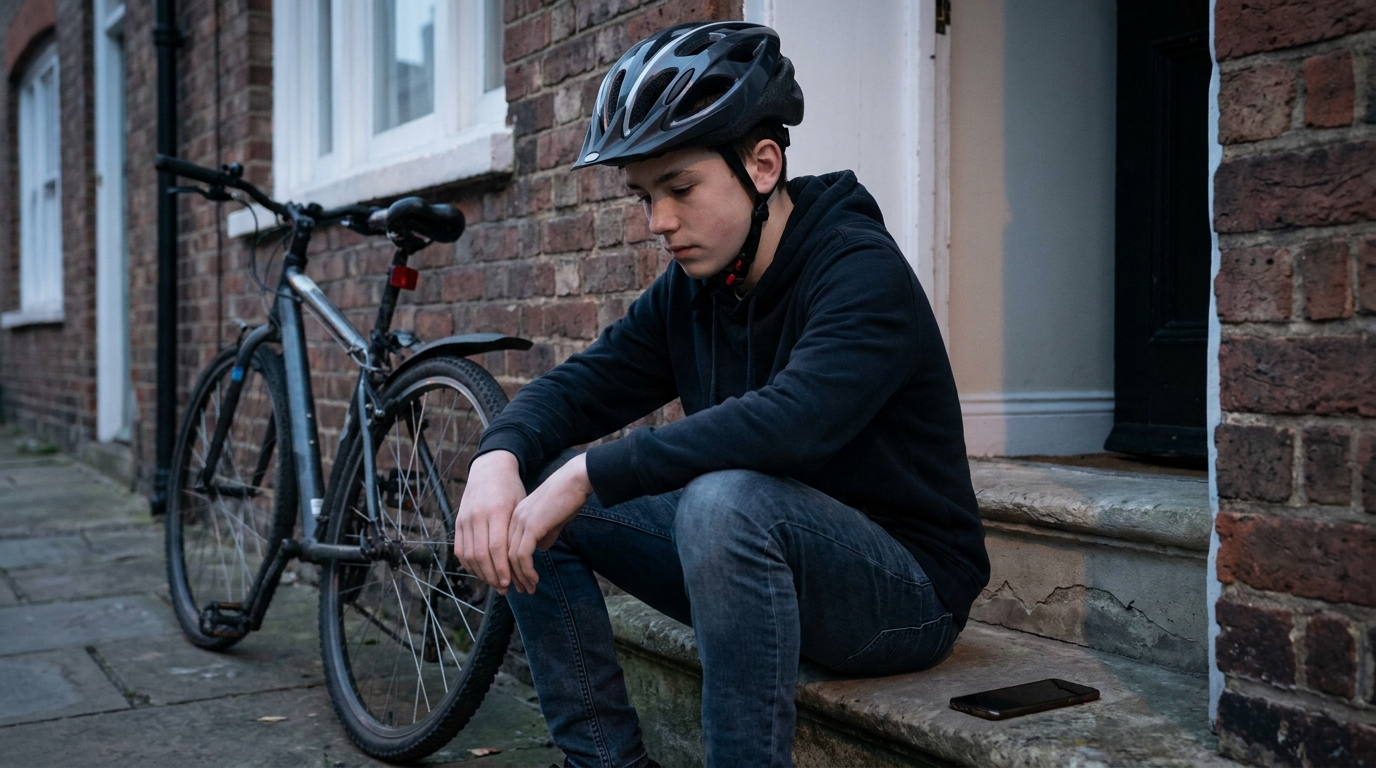
Remember:“Most nights this check passes. That is why it works.”
Pick every one that is a no, then press Check.
Two of the six are a normal ride.
Four are a no and two are fine. Most nights it passes.
Look for the nights when something about YOU changed.
10Do it now, before you leave this page
The whole lesson:“Hands off the bike until all four are yes.”
Say the four out loud before you touch it.
Go and stand next to your bike. Keep your hands off it. Say the four out loud: awake, well, calm, kitted. Then touch it. That is the order from now on.