
Control, then release
Road Badge › You Are Traffic › Control, then release
Control, then release
Hold the lane through it, then let them past.
1Out, past, and back again
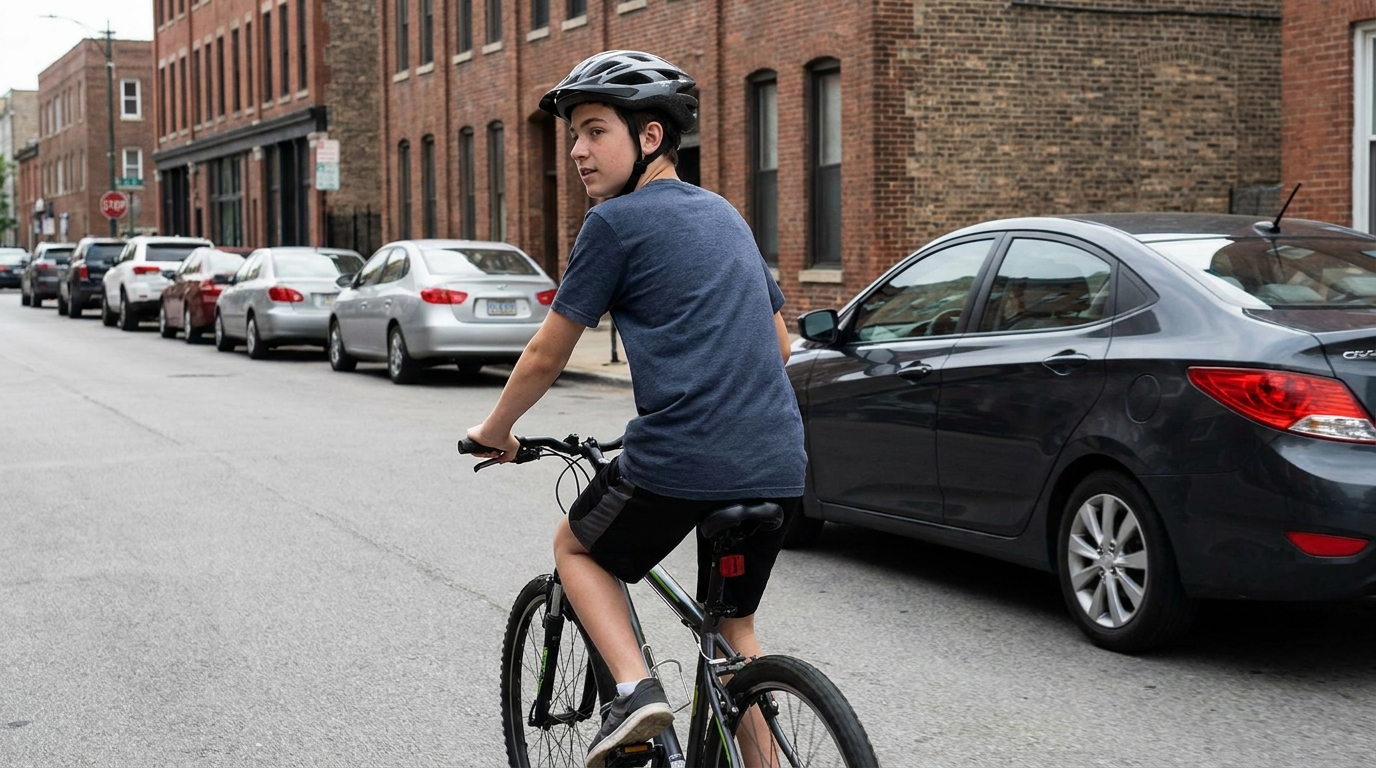
You check behind, move out into the middle of the lane, hold it the whole way past a row of parked cars, then ease back over. As you move back, a car starts to come past in the space you just left.
That is two moves, not one. The second one is the half riders skip and drivers remember.
2The name of it is the instruction
A US cycling school teaches this as lane control — moving out of the edge into a controlling position — and then as control and release: hold the lane through the hazard or the bit where nobody can see past you, then release to the right once it is safe to be passed.
The taught sequence is six steps and it is worth learning in order.
Check behind for following traffic.
Move to the control position.
Signal what you are doing.
Wait until the sight lines are clear.
Release right.
Acknowledge the driver.
3Why this phrase and not the other one
You will hear the same move called taking the lane, and it is the same position. But listen to what the two phrases promise. Taking the lane sounds permanent and sounds like a fight, and it is the phrase that makes a parent nervous and a driver annoyed.
Control and release says out loud that you are giving it back. The give-back is in the name, and the reason the school gives is exactly that: the sequence promotes safe passing by showing you know somebody is there, showing that passing is not on right now, and then releasing promptly. It answers the objection before anybody makes it.
4Run the six steps
A stretch of road with a parked row and a blind bend. Six buttons: check behind, move out, signal, wait for the sight lines, release right, acknowledge. Press them in any order and watch it play out, including the two orders that look completely sensible and end with you moving out in front of somebody.
Run the version where you release before the sight lines are clear. It is the most common real mistake and it is the one that puts a pass into a place a pass does not fit.
5Three crashes that the edge builds for you
The American teaching tradition sorts riding into three modes and ranks them: edge behavior near the curb or the parked cars, pedestrian behavior on the sidewalk, and driver behavior — using the lane as an equal driver, which consistently shows better visibility and a better vantage where paths cross.
Edge riding has three named crashes attached.
The right hook — a driver passes you and then turns right across you.
The left cross — a driver coming the other way turns left across you.
The drive-out — somebody pulls out of a driveway or side street into your line. All three are set up by being somewhere a driver is not looking.
6A car passes you, then slows for a side road.
Pick one.
Yes, and that is the right hook read early. A car that passes and then slows near an intersection is usually about to turn across you, and the only thing that helps is having already got your speed and your fingers ready. Right of way is real and it is not a thing you can steer with.
Both of those assume the driver has you in the plan. A driver who has just overtaken you has you behind them, which on the road means nowhere. And moving further right puts you deeper into exactly the space the turn is about to sweep through. This is the crash the edge builds, and reading it early is the whole defense.
7The right hook, drawn
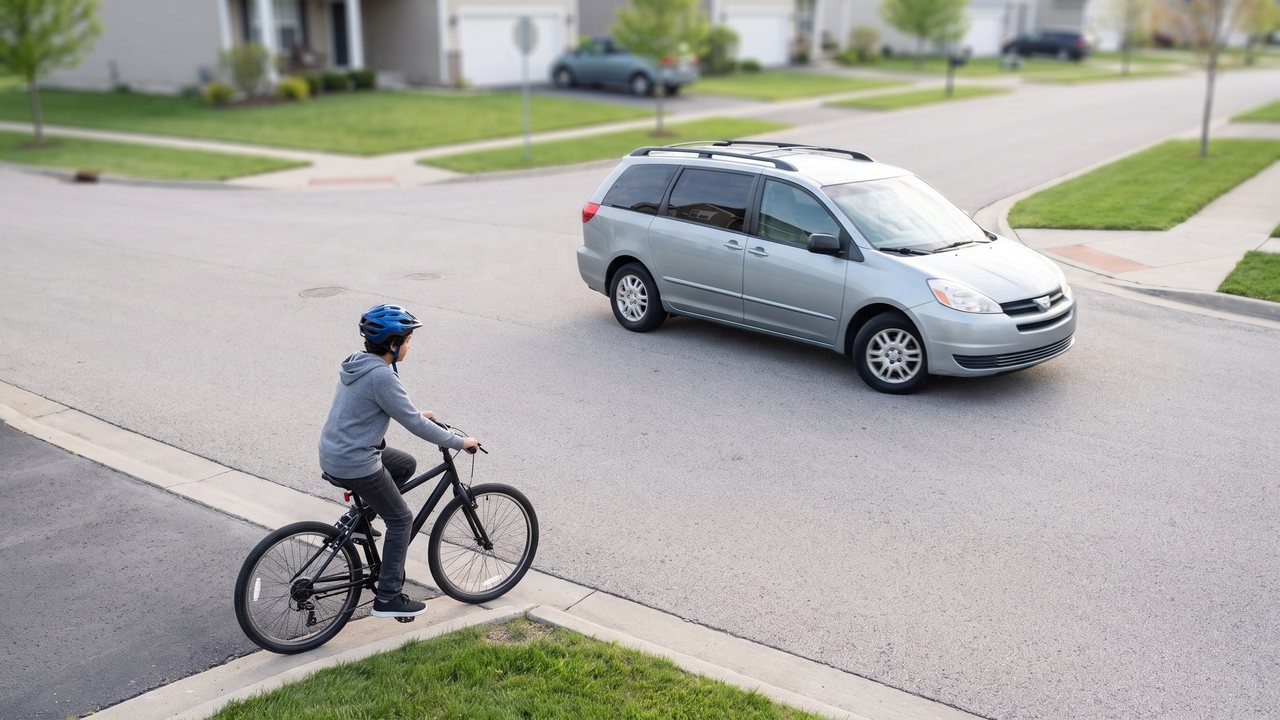
Nothing in that drawing needs anybody to be careless. The two paths simply cross, and where the rider was riding is what decided that they would.
8When do you release back to the right?
Pick every one that is right, then press Check.
Find all 3.
Four. Out, past, and back is one move with six steps in it.
Two of those skip a step. Moving without checking, or back without acknowledging.
9Two moves, said as two
Say it out loud as you make the move
Control it. Then give it back.
Saying both halves out loud is what stops the move becoming a stand-off. You are not claiming the road for the rest of the ride, you are borrowing it for about eight seconds, and knowing that changes how you ride it.
10Before you leave this page
Say the six steps out loud, five times.
In your practice space, chalk a hazard — a row of markers standing in for parked cars — and have somebody follow you on foot as the traffic. Do the six steps out loud five times: check behind, move out, signal, wait, release, acknowledge. They only tick a run if you said all six and did them in that order.