
The squeeze, and the corner
Road Badge › In the Empty Lot › The squeeze, and the corner
The squeeze, and the corner
Squeeze, never grab. Straighten, then brake.
1The last three feet of a corner
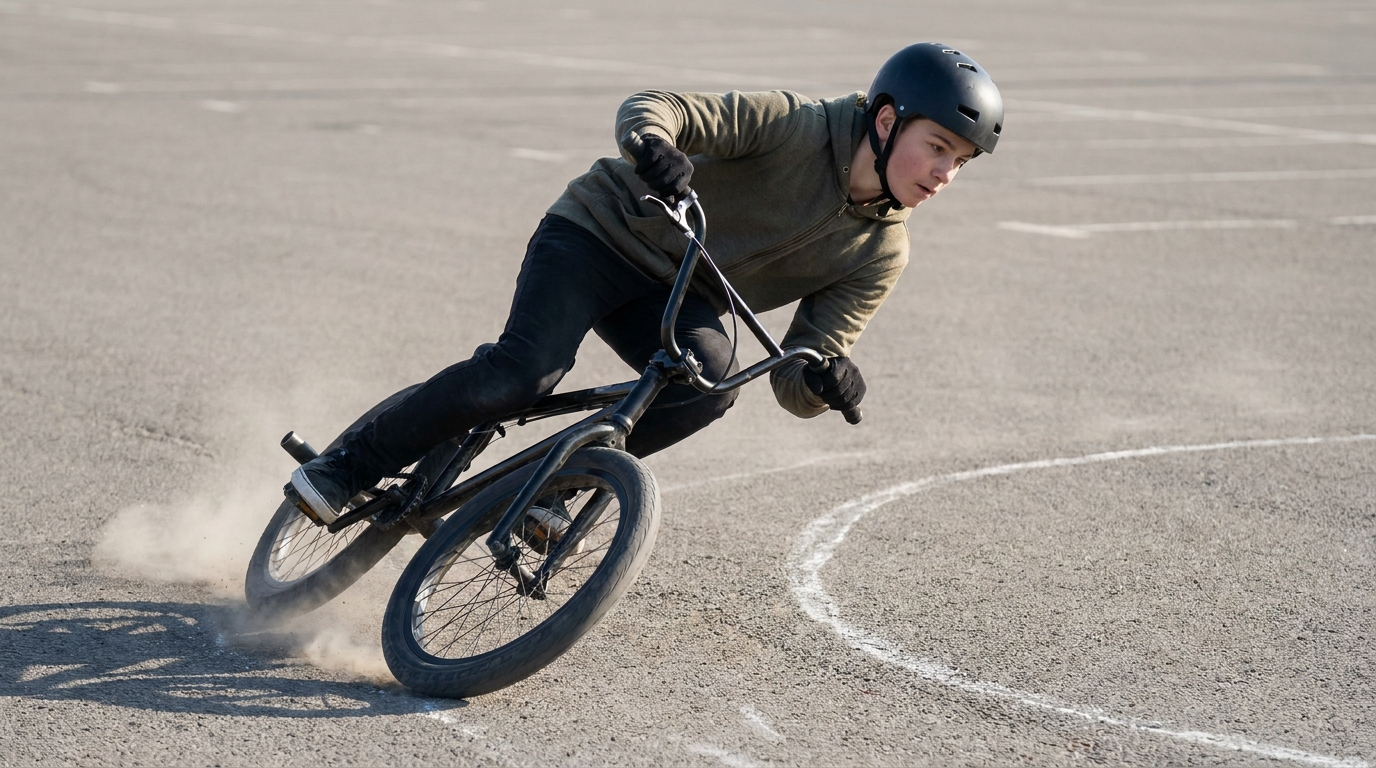
Take a chalk corner in an empty lot. Squeeze a brake while you are still leaning. The back wheel steps out sideways.
That was not a hard corner and it was not fast. One squeeze in the wrong two seconds and the bike did something you never asked it for.
2How a squeeze is meant to feel
The motorcycle manual is blunt about it: do not be shy about the front brake, but do not grab it either. Squeeze the lever firmly and progressively. One mechanics writer describes the action as squeezing a lemon, which is a better instruction than most of the technical ones.
Progressive means the pressure arrives across about a second rather than all at once. A grab is not a stronger stop. It is a shorter one that ends in a skid or a lifted wheel, and on a machine carrying a battery and a motor there is more weight behind whatever happens next.
3What your body does while the machine stops
The taught position has four parts.
Pedals level, at three and nine.
Weight just off the saddle.
Hips back, behind the saddle if you can get there.
Elbows bent, arms braced against the deceleration.
The last one is the interesting one. The theory the cycling engineers put forward is that going over the bars is usually caused not by braking too hard, but by braking hard without bracing your arms against it. The fix is where your body is, not less brake.
4And then the rule with no exceptions in it
Three sources give this three different strengths. The motorcycle manual says straighten up first and then brake, and allows light braking mid-lean while you trade lean angle for brake pressure. The two cycling sources say do not touch the brakes while leaning at all, because the back wheel lifts and slides out.
We are teaching the strict version: straighten, then brake. It has no failure mode, and the softer version is a refinement for riders with a license and years behind them. A tire only has so much grip, and cornering is already spending some of it.
5The corner is tighter than you read it.
Pick one.
Yes, and it is two moves instead of one. Straighten, brake, then turn in again at a speed the corner can take. It costs you a bit of the corner and it never costs you the machine, and it is the only version of this that also works on a wet or loose surface.
Both of those spend grip you have not got. A tire has one budget and the lean is already using part of it, so braking mid-lean asks for more than is there and the back end goes. Leaning further does the same thing, and adds the inside pedal to the list of things that can touch the ground.
6Slow, look, lean, roll
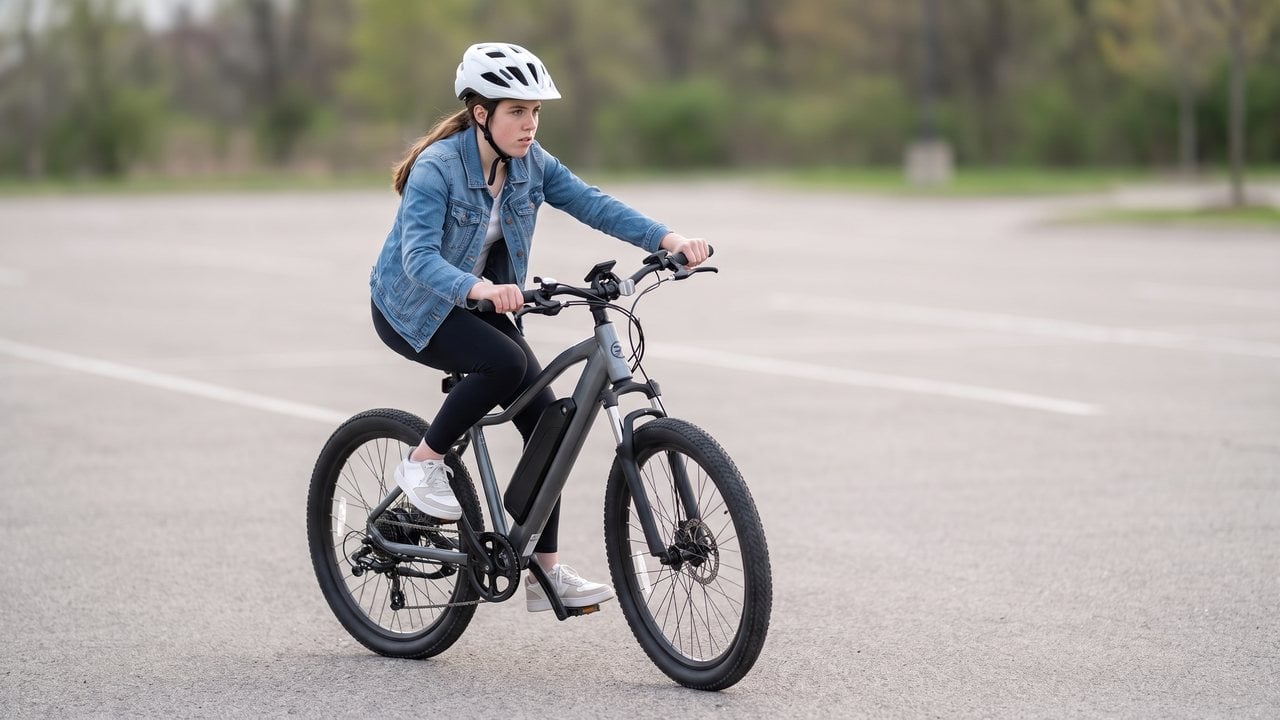
That is the motorcycle manual’s four-step corner, and the first two of the four both happen before the machine has turned at all.
7The four steps, and the pedal
Slow — get the speed off before the turn, not in it.
Look — look through the turn to where you want to go, not at the curb.
Lean — let the machine lean under you.
Roll — pick the drive back up as it stands itself up on the way out.
And one step the motorcycle version does not need. Stop pedalling once you start to lean, push the outside pedal down, and keep it there. A pedal at the bottom of its stroke on the inside of a lean can touch the ground, and a pedal that touches the ground lifts a wheel off it.
8Which of these are true about braking and turning?
Pick every one that is right, then press Check.
Find all 4.
Four. Upright to brake, leaning to turn, and never both at once.
Two of those ask the tyre to do two jobs with one patch of grip.
9The one you will need mid-corner
Say it out loud, in your normal voice
Straighten, then brake.
Three words, and they run against what your hands want to do the moment a corner tightens up. Say them on every practice corner until the order stops being a decision.
10Before you leave this page
Five straight stops, then five clean corners.
Two things, both watched. Ride at a steady speed towards a chalk line and stop with both brakes, squeezing across about a second, staying straight and upright — five times, ticked only if the machine neither skidded nor slewed. Then ride a chalk corner five times with the outside pedal down and no braking at all once you are leaning.