
The weave and the box
Road Badge › In the Empty Lot › The weave and the box
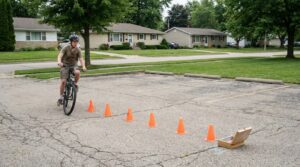
The weave and the box
At walking pace the rear brake does the work.
1Six markers and a box
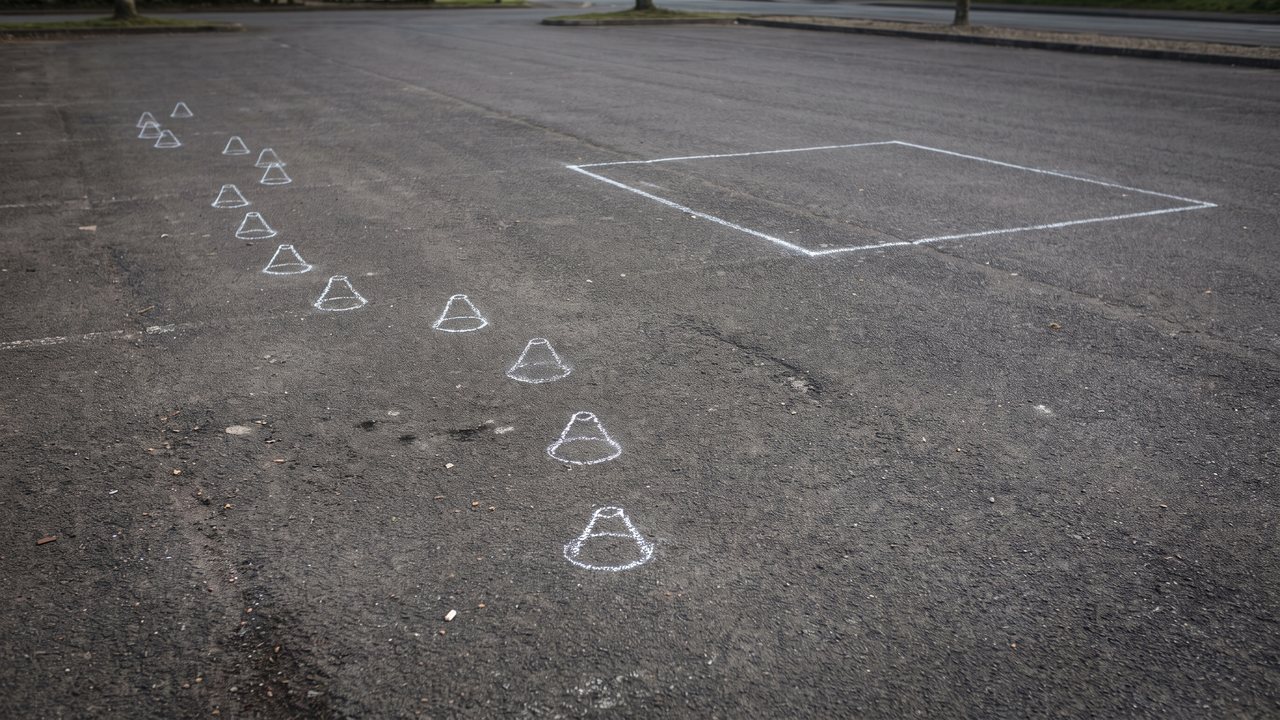
Six markers in a line to weave through, and a chalk box at the end to stop in.
About four dollars of equipment on the ground. Those are two of the exercises adult motorcycle licensing tests people on, drawn in chalk.
2Two drills, with the dimensions they come with
Both come from the motorcycle rider skill test and both are drawn on the ground.
The weave: markers twelve feet apart in a straight line. Ride to the right of the first, the left of the second, and so on, touching none and skipping none.
The stop box: three feet by five. Come to a smooth stop with the front tire inside it, not touching a line.
Neither is a trick and neither is fast. They are both asking one question: can you put the machine exactly where you meant to put it — which is the only question an intersection, a line of traffic or a gap between two parked cars ever asks you.
3The one exception to both brakes
Everywhere else this course says use both brakes. Here is the single place it does not. For slow, tight manoeuvres, control your speed with the rear brake. The racing body teaches it in its slalom drill, and the mechanics writers give the reason: touch the front brake in a tight slow turn and the machine tucks in and goes down under you.
So it is a real exception and it is narrow. Slow, tight and turning: rear brake. Everything else: both. On a heavier machine the tuck happens faster and there is more of it to catch once it starts.
4Where your eyes are in a weave
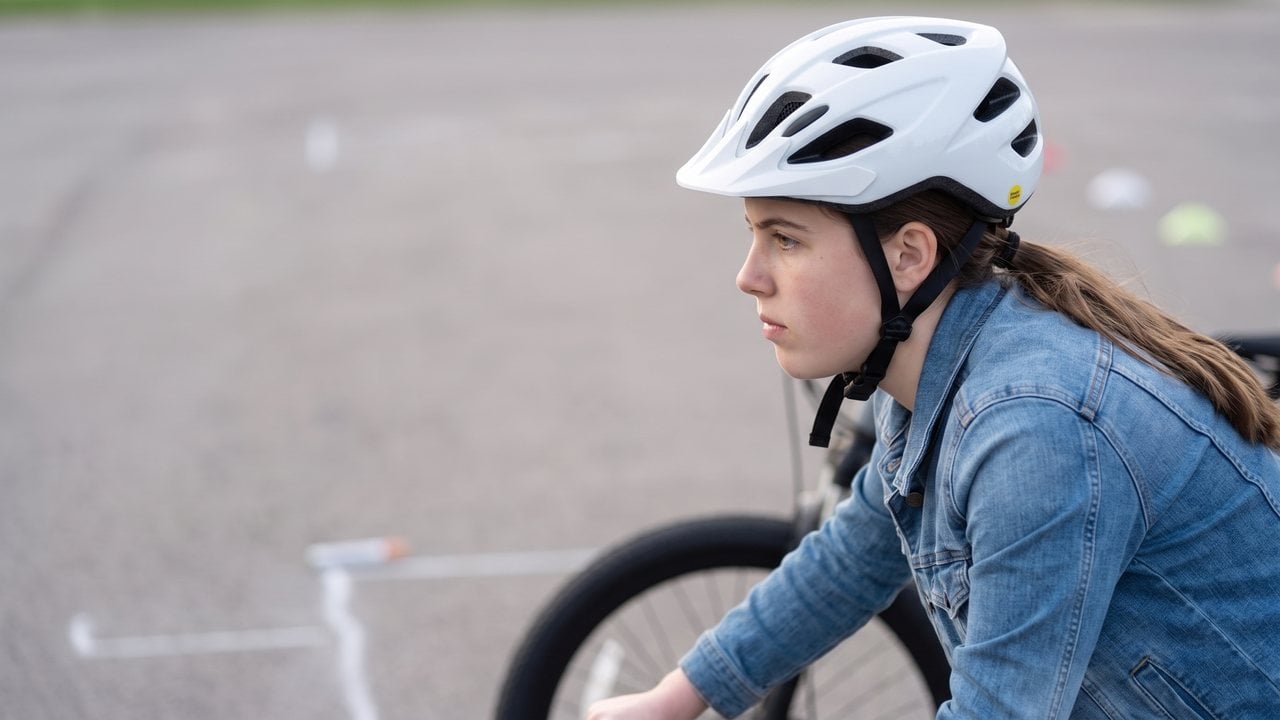
The head is a marker ahead of the wheel the whole way down. Look at the marker you are passing and you will hit the one after it.
5Three coaching notes, all counter-intuitive
Start wider than you think you need to. Riders set up too tight for a slow turn and run out of room halfway round, and there is no fixing that once you are in it.
Look through to the next marker.
Keep some pedal pressure on. A machine with drive through it is steadier than one coasting.
Those three are the racing body’s own coaching points for this exact drill, and every one of them is about the next few feet rather than the ones you are in. Slow riding is almost entirely a matter of looking further ahead than feels natural.
6Too fast for the next marker.
Pick one.
Yes, and both halves matter. Rear brake because the front one tucks a leaning machine at low speed, and look further through because the reason you arrived fast is that you were watching the marker instead of past it. Speed and eyeline are the same problem here.
Careful with both of those. The front brake is the right answer nearly everywhere else on this course and it is the wrong one here — grabbing it in a slow lean puts the machine on its side. And coasting takes the drive out exactly when you need it settled, so you drift wide instead of turning.
7Chalk it out
A blank parking lot you draw on. Place your markers, set the spacing, draw the stop box, then run a rider through and watch the line they take. The card shows the sourced spacing — twelve feet, and a box three by five — and what happens to a machine this size when you set them closer than that.
Set the markers far too close first and watch what a machine this heavy actually needs. Then put them back to twelve feet.
8Which of these are true of slow-speed work?
Pick every one that is right, then press Check.
Find all 4.
Four. Slow control is the rear brake and looking through, every time.
Two of those belong to fast riding. The front brake and a hard lean do not do slow.
9The line for the weave
Say it out loud before each run
Rear brake. Look through.
Two things, and they are the two your hands and your eyes get wrong under any pressure at all. Say it at the start of every run until the run makes you do it without the words.
10Before you leave this page
Weave the six markers and stop in the box.
Set six markers twelve feet apart and chalk a box three feet by five at the end of them. With somebody watching, ride the weave and stop in the box five times. They tick a run only if you touched no marker, skipped none, used the rear brake for your speed, and stopped with the front tire inside the box without touching a line.