
The two road positions
Road Badge › You Are Traffic › The two road positions
The two road positions
Middle of the lane, or three feet out.
1The same street, two positions
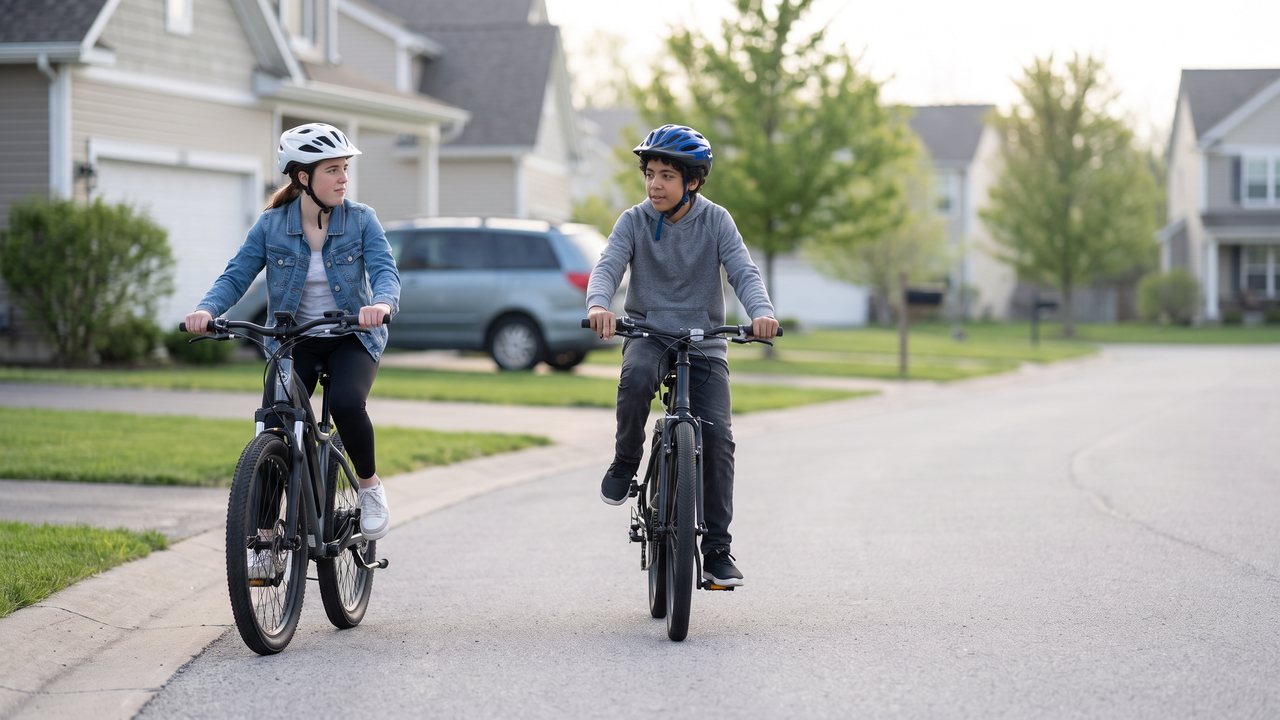
Primary, out in the middle of the lane. Secondary, about three feet in from where the traffic runs.
Both of those are taught positions with names, and a trained rider moves between them on purpose. Neither of them is the one most riders actually use, which is somewhere hard against the curb.
2Two positions, and the names are most of it
The most precisely specified positioning doctrine in English names two positions and puts numbers on them.
Primary — the center of the moving traffic lane you are traveling in. It is also called taking the lane, because it is the position a driver would use.
Secondary — about three feet, or three feet, to the side of the moving traffic flow where the road is wide, and never closer than a foot and a half to the edge of any road.
One translation you have to make, and it is a real trap. That standard is written for a country where traffic drives on the left, so every left in the original becomes right here. Secondary in North America is three feet to the right of the traffic flow. Primary is the center of the lane, which is the same either way.
3When each one is used
Primary is for intersections, roads that narrow, bends, anywhere there is not enough room for somebody to overtake you safely, and any time you are moving at about the speed of the traffic. On this machine that last one happens more than it did on the bike you learned on.
Secondary is for the rest of it — where there is time and space for somebody to get past you. So the two positions are not brave and timid. They are a wide road and a narrow one, and you will use both of them on any ride longer than a few minutes.
4Put the rider on the road
Eight pieces of road arrive one at a time: a wide street with nothing parked, a lane with cars down one side, the approach to an intersection, a blind bend, a narrow bridge, a long straight with a car coming up behind, a stretch where you are keeping up with the traffic, and a wide road with a line of cars behind you. Place the rider, then the card shows the standard’s own answer and why.
Two of the eight have more than one defensible answer. The card says so rather than pretending otherwise.
5Secondary is not the gutter
Look again at what secondary actually says: never closer than a foot and a half to the edge of the road. There is a floor written into the definition. The position has a minimum distance from the curb built into it, which means the standard is describing a real place on the road, not an instruction to get as far over as you physically can.
The curb itself is the one place nobody teaches you to ride. It is where the grit, the glass, the drain grates and the sunken gutter seam all are, and it is where you are least visible to somebody pulling out of a driveway or a side street.
6The lane narrows, and a car is behind you
Pick one.
Yes, and it is the answer the standard gives too. Narrow road, no room to be overtaken, so primary. Squeezing right in a lane that cannot be shared does not create the space — it just invites a pass that was never going to fit, at the closest possible distance to you.
Think about what moving right actually offers. On a lane too narrow to share, going further over does not make room; it makes the attempt look possible. The position that says clearly there is no room here is the center of the lane, and it is the one written into the standard for exactly this piece of road.
7The two words, used on real road
Say it out loud as the road changes
Primary here. Secondary after the bend.
Say it on your next ride at every place the road changes width. Naming the position out loud is what turns it from where you happen to be into something you chose, and choosing is the whole skill.
8Which of these call for primary?
Pick every one that is right, then press Check.
Find all 4.
Four. Primary is for when being passed would be worse than being followed.
Two of those are the opposite. A wide road and a car behind are both reasons for secondary.
9A lane that cannot be shared
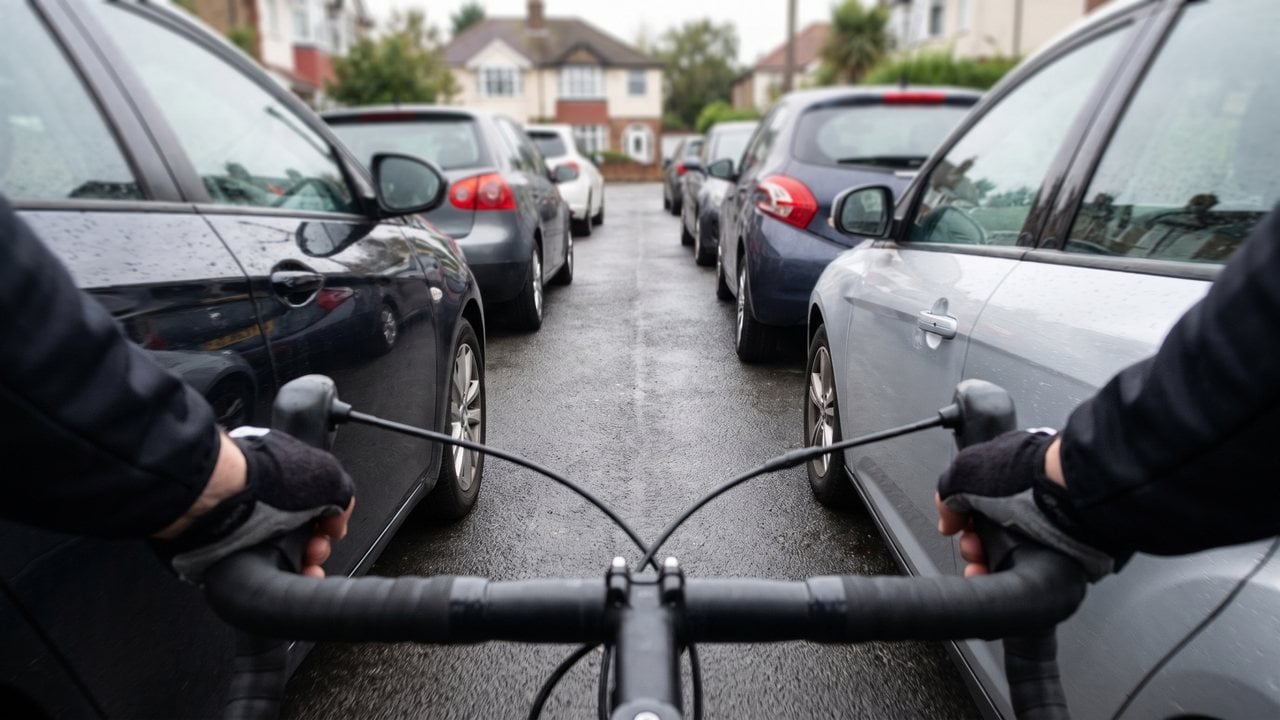
You can see it in one glance from the saddle, and once you can see it you have the answer for that stretch of road without having to think about it.
10Before you leave this page
Hold primary five times, then secondary.
In your practice space, chalk a lane about the width of a real one. Ride it in primary — dead center — five times, then in secondary, about three feet in from where the traffic flow would be and never within a foot and a half of the edge. Somebody watches and calls out which position you are in, and only ticks it if you can hold it for the whole run.