
You get one of them, not both
Road Badge › When It Goes Wrong › You get one of them, not both
Road Badge› When It Goes Wrong
You get one of them, not both
Brake, or steer. Never both at once.
1One tire, one budget

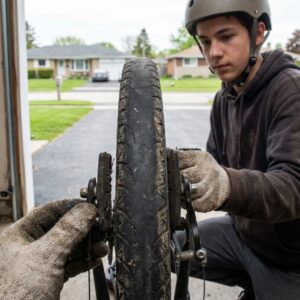
That patch of rubber is about the size of a thumbprint and everything you ask of the machine comes out of it. Cornering spends some. Braking spends more. There is no overdraft on it.
2Why the rule is worded as never, not as rarely
You met this in the last lesson and in badge three, and it is the same physical fact both times. Brake before or after — never while swerving. A tire that is holding a lean has already committed part of its grip. Ask for hard braking on top and something lets go, and what lets go is usually the back wheel.
So every emergency in this section starts with one decision: is this a stopping problem or a going-round problem. Make it early and you get to use one tool properly. Make it late and you do half of each, which is the combination the manuals write against.
3How to choose, in about a quarter of a second
If there is room to stop, stop. Stopping is the move with the fewest ways to go wrong: it happens in a straight line, it does not need a gap to exist anywhere, and it does not put you anywhere new.
If there is not room to stop, you go round — and the brakes come off to do it. That is the awkward half, because letting go of the brakes when something is close is the opposite of what your hands want. It is also why this gets practiced in a lot, where the object is a paper plate.
4The call, made out loud, early
Say it out loud on the approach, before you arrive
Stop. Or round. Pick one.
Say it at every hazard you see on your next ride, even the ones that turn out to be nothing. The point is to make the choice a thing you already do rather than a thing you have to invent at thirteen feet.
5The door, which has no move in it
A door that opens three feet in front of you has no manoeuvre in it. Braking is too late, and going round means going left, into the lane, into traffic you cannot see, at the worst possible moment. That is how a dooring becomes a much worse crash than the door itself.
So here is an honest thing about the sources. We looked for a written technique for a door already opening and there is not one. Everything the safety literature has on doors is about not being there: check each parked car for people before you pass, ride outside the four-foot door zone for the whole row, and take the center of the lane if there is not room for both your four feet and the passing distance a driver owes you. The absence of a manoeuvre is the teaching point.
6A door opens two car lengths ahead.
Pick one.
Yes, and two car-lengths is exactly the case where you still have the good option. A hard straight stop uses the tool with the fewest failure modes and does not put you anywhere new. The lane behind you is the one thing you cannot see, so it is the last place to send yourself.
Look at where each of those puts you. Swerving left moves you from a problem you can see into traffic you cannot, and the driver behind has no idea it is coming. And speeding up bets the whole thing on how fast somebody else opens a door, which is not a number you have.
7Stop or round, called early
A rider's-eye ride down a street with things appearing at different distances: a pothole at ten feet, a car nosing out at twenty, a door starting to open at two car-lengths, a fallen branch across the lane at ten. You have two keys, stop and round, and you must press one before a line on the screen goes past. The game marks whether the tool matched the distance and whether you used only one of them.
Play it twice. The score that matters is not how many you survived, it is how many you called before the line, because that is the only version of this you can actually do on a road.
8Which of these are stopping problems?
Pick every one that is right, then press Check.
Find all 3.
Three you can stop for. All three you saw early enough to have a choice.
Three of those are too close to stop for. Those are dodges, not stops.
9Four feet, one row, no exceptions
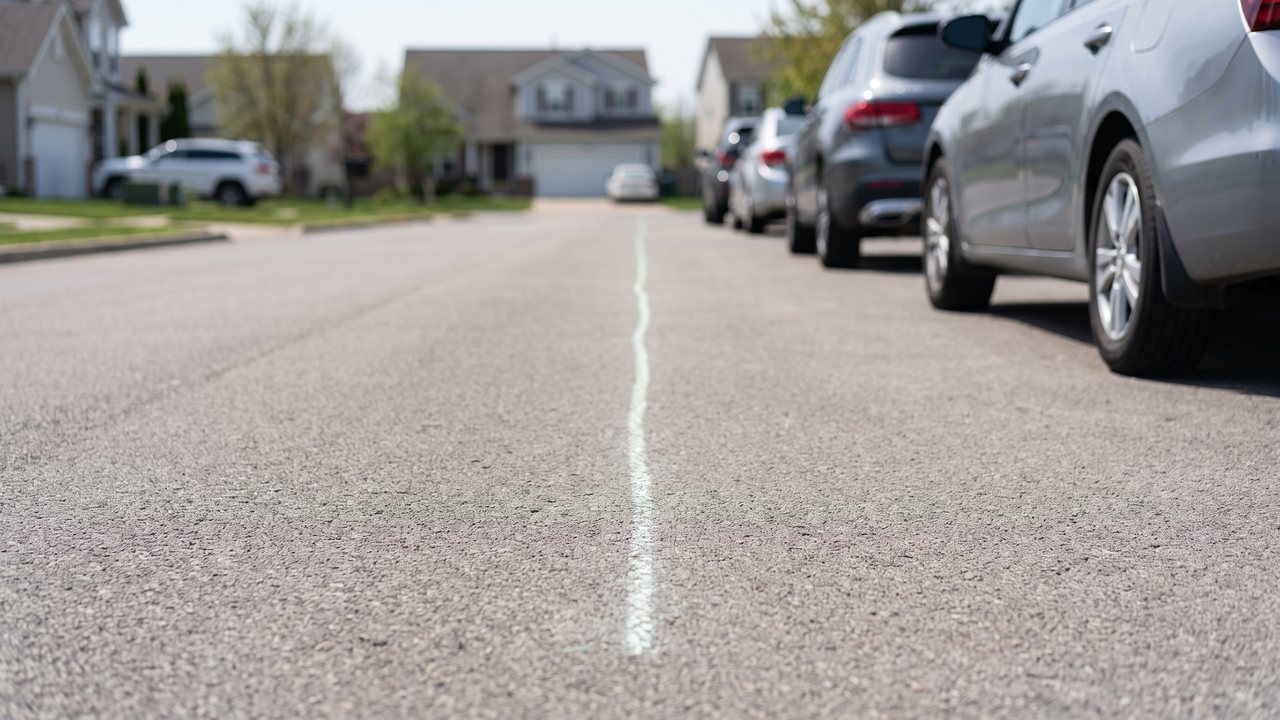
That straight line is the entire door manoeuvre, and it happens minutes before any door does anything. The emergency version of this skill is a position, not a move.
10Before you leave this page
Call stop or round before the line. Ten runs.
In the empty lot, chalk two objects on the ground: one far enough away that you can stop before it, one close enough that you cannot. Ride at each one and call stop or round out loud before you reach a chalk line drawn well short of it, then do the one you called. Ten runs. Your witness ticks only the runs where the call came before the line and you used one tool, not two.