
Glance, check, stare
Road Badge › Look Behind, Ride Straight › Glance, check, stare
Road Badge› Look Behind, Ride Straight
Glance, check, stare
Three looks. Take the smallest one that works.
1Three looks, three positions
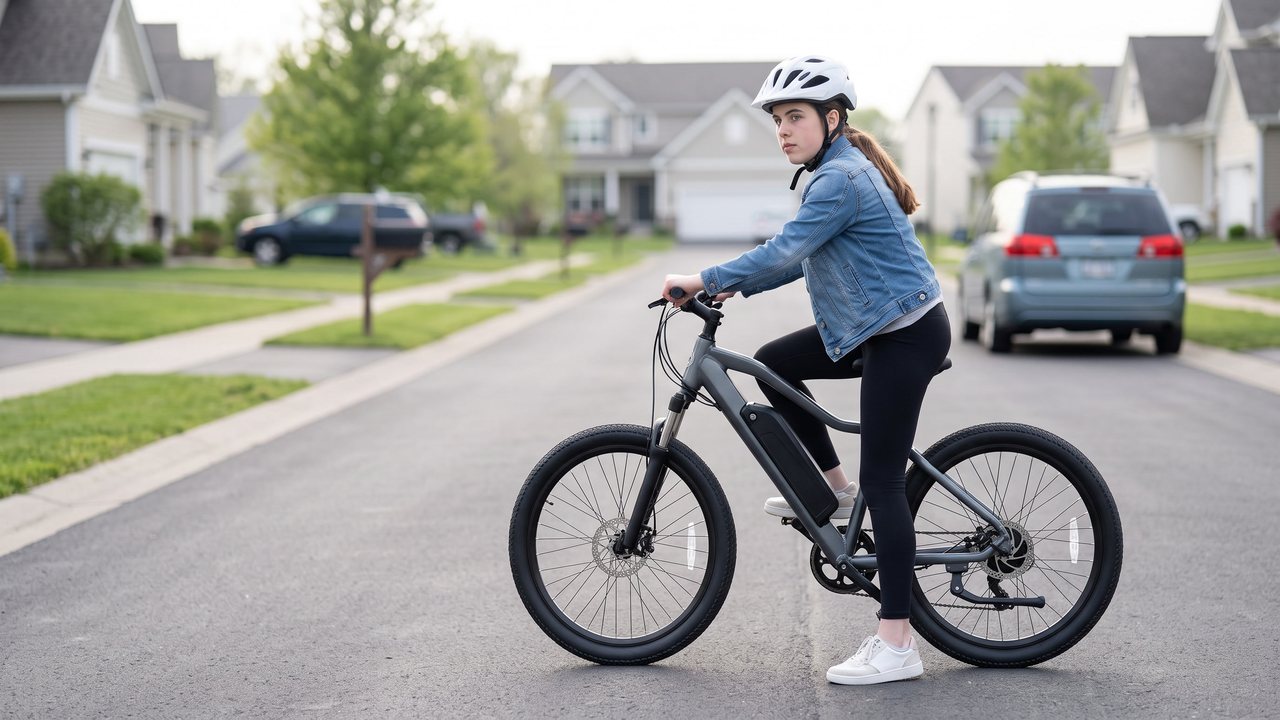
Same rider, same machine, three completely different amounts of road going past unwatched in front of them.
2Instructors teach three of these, not one
National standard instructors separate them out and give each one a duration and a hand position.
The glance — half a second or less, both hands stay on the bars.
The check — about a second, a slight twist of the body, possibly one-handed.
The stare — about two seconds, the body fully round, one hand off.
The names matter less than the fact that there are three. Most riders have exactly one look, use it for everything, and it is usually the shortest one. That works right up until the question in front of them is one a half-second cannot answer.
3What each one costs you in front
Every look is time spent not watching where you are going, and you keep moving the whole time. A study that measured real riders in daily use found assisted bikes averaged 20.5 km/h against 16.6 km/h on ordinary bicycles, so the same one-second look covers more ground on this machine than on the bike you learned on.
That is the whole reason to own three looks instead of one. A two-second stare at that speed is a long way traveled blind. You spend the big one where the road ahead is empty and simple, and the small one where it is not.
4Which look answers which question
Is there anything at all behind me? A glance, both hands on.
Where exactly is it, how fast, which bit of the road? The middle one, body turned a little.
Is that driver actually reacting to me? A stare, or you do not really know.
Take the smallest look that answers your question and then get back to the front. The mistake is rarely using the wrong look. It is using one look for every job — so either you never see enough, or you spend two seconds blind finding out something a flick would have told you.
5Pulling out past a parked car. What is behind?
Pick one.
Yes, because of the question you are actually asking. Whether anything is back there is not the question — how far and how fast is. A half-second flick tells you a car exists. It cannot tell you whether you will be across before it arrives, and that is the thing you are deciding.
Look at what each of those can tell you. A flick answers yes or no and nothing else, which is not enough for a decision about a gap. Listening tells you even less, particularly when the thing behind you is a quiet car or another rider.
6Pick the look
Six situations arrive one at a time: something ahead you may swing around, an intersection coming up, a driver you think has seen you, a friend you have lost behind you, a turn you are about to signal for, and a pothole. Choose glance, check or stare for each. The card then shows what each of the three would actually have told you.
Two of the six are answered by the smallest look, which is the half most riders get wrong in the opposite direction.
7Which of these are true about the three looks?
Pick every one that is right, then press Check.
Find all 4.
Four. The right look is the smallest one that answers the question.
Two of those treat looking as free. Every look costs you the road ahead.
8The question before the look
Say it out loud before each practice look
What do I need to know back there?
The answer decides which look you take. Ask it out loud a few times and you will notice how often the honest answer is only is there anything at all, which is the cheapest of the three.
9Before you leave this page
Practise the glance, the check and the stare.
On your practice line, do all three deliberately, ten of each, with somebody behind you holding up fingers or a card. A glance with both hands on. Then the longer look with the body slightly turned. Then a full turn with one hand off. They tell you two things every time: what you missed, and how far the line moved.