
What a throttle changes
Road Badge › Know Your Machine › What a throttle changes

What a throttle changes
A throttle does not wait. Feet set first.
1A thumb, and a foot
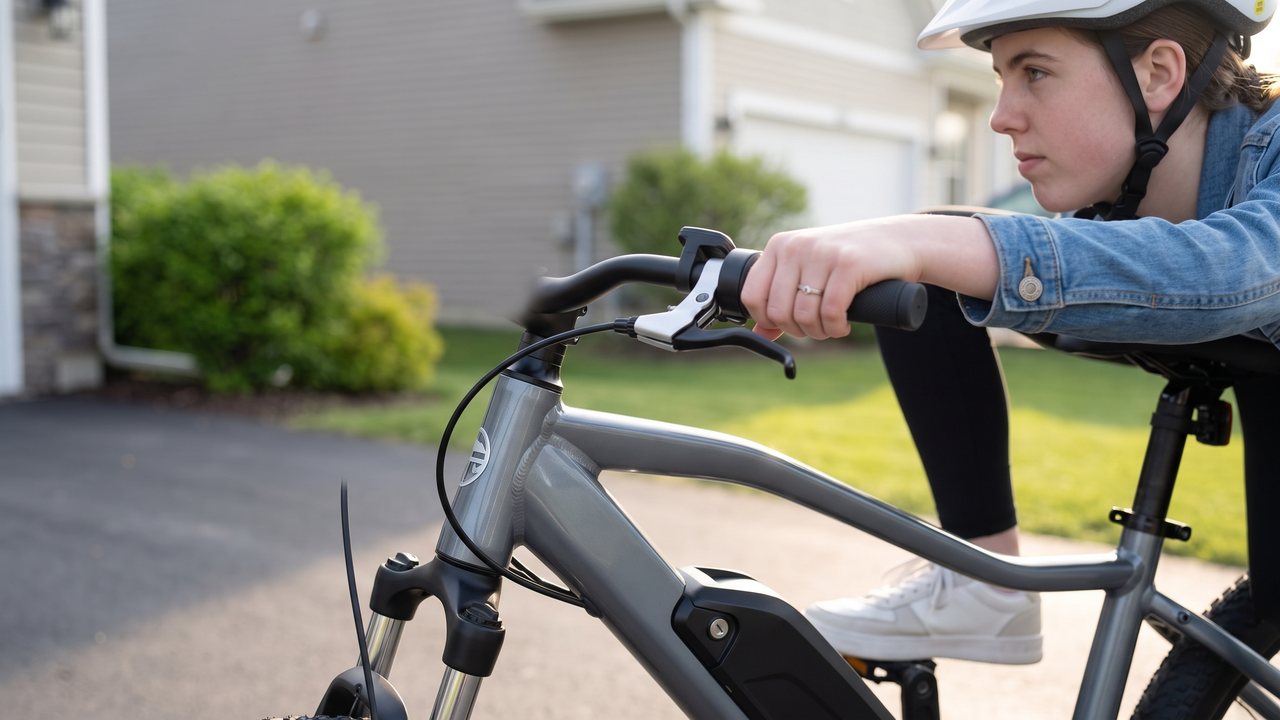
Those are the two different switches that make a machine like this move, and only one of them needs you to be on the bike and ready.
2One of them waits for you and one of them does not
Pedal assist only adds power while you are already pedalling. The machine cannot go anywhere until you are on it and the cranks are turning, which means it is physically incapable of surprising you at a standstill.
A throttle delivers power with no rider input at all. A thumb or a twist is enough, and nothing requires you to be balanced, seated, or even fully on the machine. That is not a fault. It is what a throttle is for. It means the order you do things in matters more.
3Find out what turns your motor on
The safety guidance written for adults makes this a numbered instruction: understand what actions will turn your machine's motor on. Typically it is powered on and pedalling, plus whatever throttle options the machine has, and it is not identical across two machines that look the same.
The same guidance names another thing to look for: motor-interrupt brake levers, which cut the motor the instant you touch a brake. Plenty of machines have them and plenty do not. Find out which yours is before something makes the decision urgent.
4Power on, power off
A machine on screen with four switches: powered on or off, assist level zero or higher, pedalling or not, throttle touched or not. Set any combination and the card says whether the wheel turns and why.
Find every combination where the wheel turns while both of your feet are still on the ground. There are more of them than most riders expect.
5One foot down, and your thumb finds the throttle.
Pick one.
Yes, and that is the entire difference. A throttle does not wait for you to be balanced, and it does not creep politely first. It is also the reason the first ten minutes on any machine you have not ridden before belong in an empty parking lot rather than on a road with anybody else in it.
That is the pedal-assist answer. Assist only adds power once you are already pedalling, so it cannot move without you. A throttle takes no input from you at all, so the machine can be under power while you still have a foot on the ground. Set your feet, then power.
6The throttle has a check of its own
Motorcycle training checks a throttle three ways before every ride, and all three carry straight across: it moves freely, it snaps closed when you let go, and there is no power when the handlebars are turned.
That last one is the good one, and no cycling checklist has it. With the machine powered on, turn the bars from one lock to the other and confirm nothing happens. A cable pinched against the frame can hold a throttle slightly open, at exactly the moment your steering is at full lock.
7The order, so it never gets swapped
Say it out loud as you get on
Feet set, then power.
Say it every time you get on for a couple of weeks. It puts the two events in an order that cannot hurt you, and after two weeks your hands do it without the sentence.
8Which of these are true of a throttle?
Pick every one that is right, then press Check.
Find all 3.
Three true. A throttle moves the machine whether you are pedalling or not.
Three of those are wrong about when a throttle works, or about every bike having one.
9How much power to use, honestly
You will read everywhere that beginners should start in the lowest assist level. We went looking for that instruction in an actual curriculum or study and could not find it in one, so we are not going to hand it to you as a rule and pretend it is more than advice.
What rider training does say is the useful version: show that you can control the power you already have before you take more of it. And the same adult guidance adds a plain one — power down when you do not need the assistance.
10Before you leave this page
Turn the bars. Check the wheel does nothing.
Power the machine on, stand beside it, and turn the bars slowly from one lock to the other. The wheel should do nothing at all. Then squeeze each brake lever and watch whether the assist cuts out, and say out loud which of the two your machine does.