
The helmet
Road Badge › Fit to Ride › The helmet

The helmet
A helmet that fits, buckled, every ride.
1Right way, wrong way

Both of them have the same helmet on. Only one of them is wearing it where it can do anything.
2What it covers
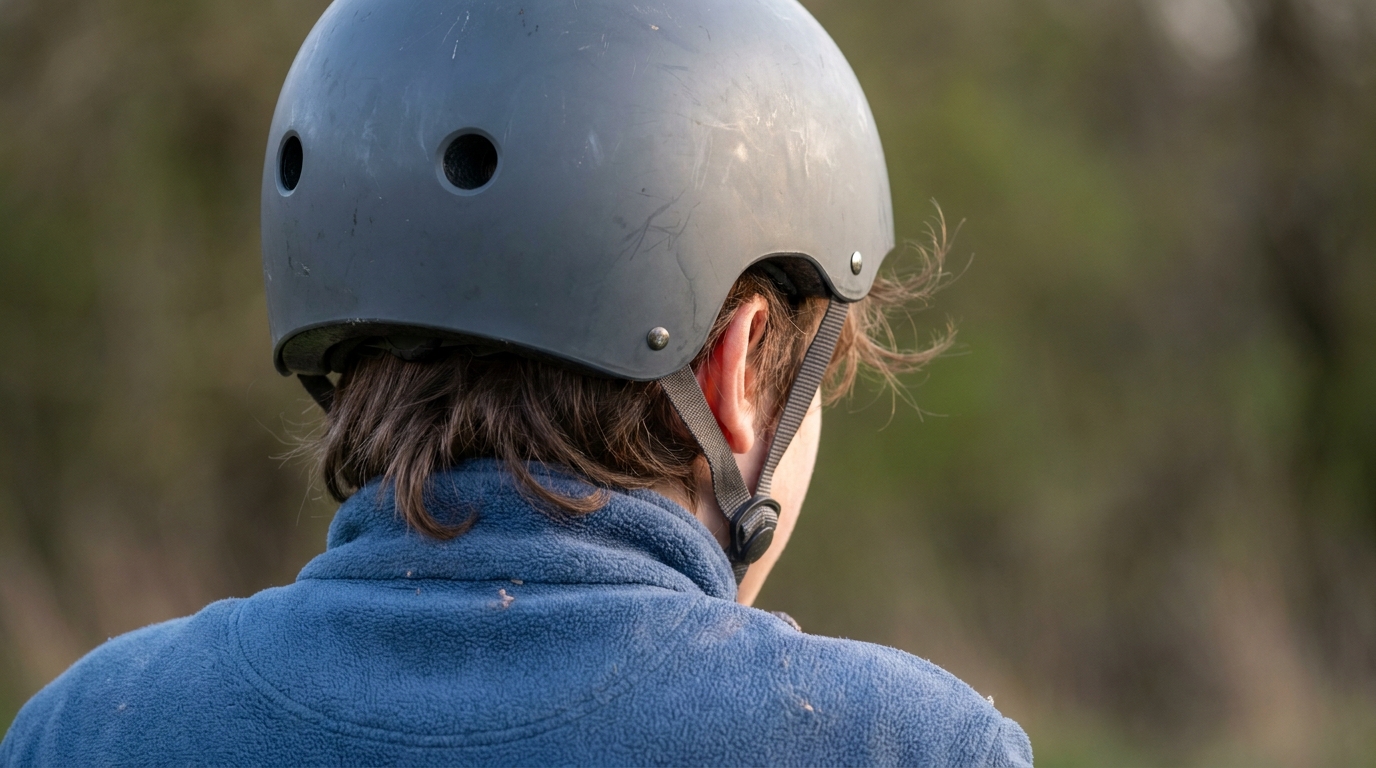
A helmet has one job. It takes the hit instead of your head.
Worn properly it covers your forehead, the sides of your head and the back. Those are the parts that hit the ground. It does not stop you crashing, and it does not make you a better rider. The rest of this course is about not crashing. This part is about what happens if you do.
3Four things that make it fit
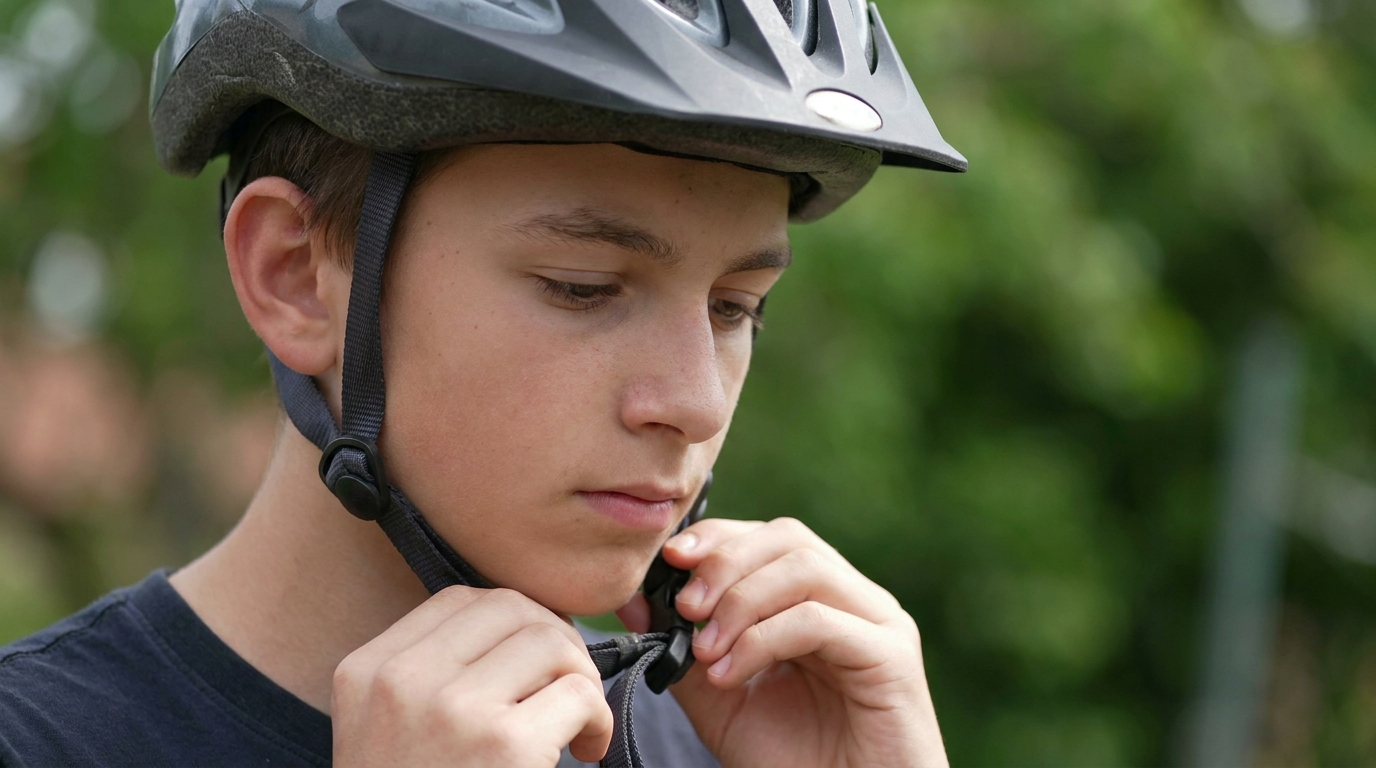
Level. Flat on your head, not tipped back.
Low. The front edge about two fingers above your eyebrows.
A V under each ear. The side straps meet just below the ear.
Snug. One finger fits under the chin strap. Not a whole hand.
Two minutes, once. After that it stays where you set it.
4Set it once, on the table
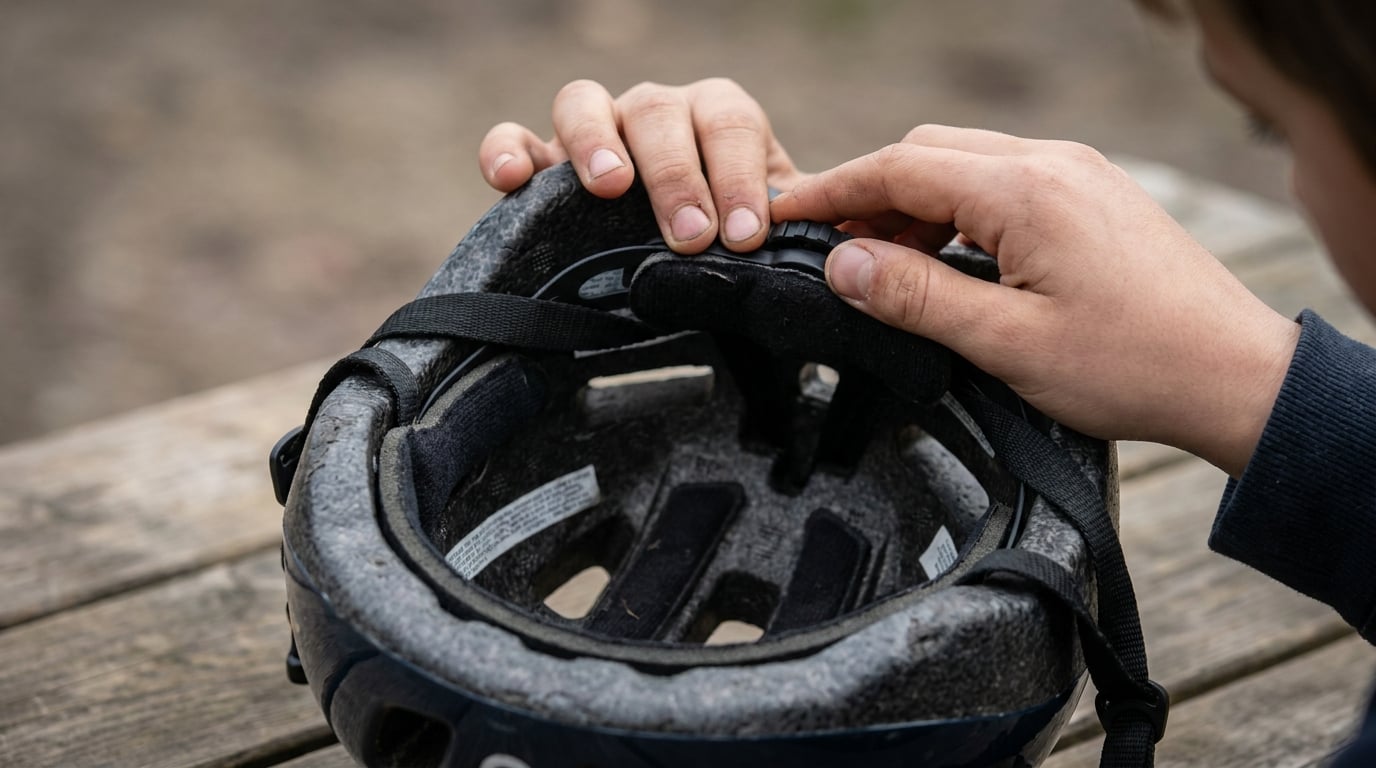
Do the fitting indoors with the helmet off your head, where you can see what you are doing. There is a dial at the back that tightens the cradle, and the side straps slide to move the V.
Get it right once on the table, then it is right every time you pick it up.
5It is only to your friend's house. Which one?
Pick the one you would do.
Right, and the boring reason is the correct one. Short rides on streets you know are most of your rides, so most of your chances to fall are on them. There is also no version of that trip where the helmet costs you more than about eight seconds.
Think about where your riding actually happens. Almost every ride you take is a short one near home. If the helmet only comes out for the long ones, it is off for nearly all of your riding time, on exactly the streets where you have stopped looking hard.
6The law is the lowest bar, not the goal
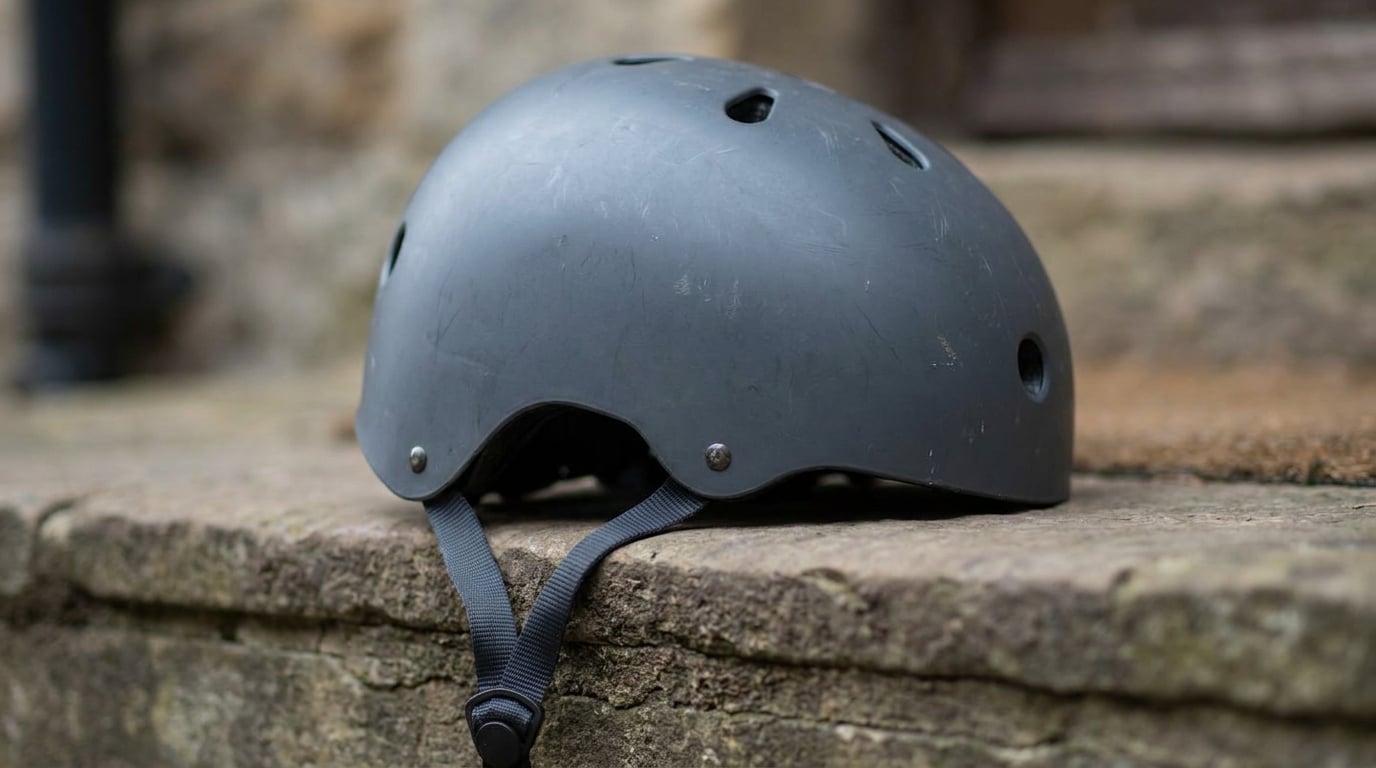
Some places have a helmet rule up to a certain age. Some have none at all.
A rule is the least somebody decided to ask for. It is not the point where a helmet starts working. A helmet does exactly the same job whether or not the law where you live mentions it. In this course the rule is simple: every ride.
7Which of these need a helmet?

Tap every one that does.
Find all 4.
Every ride needs it. There is no trip short enough to be the exception.
Two of those are not riding at all. If the wheels are not turning, you are not riding.
8Say it out loud
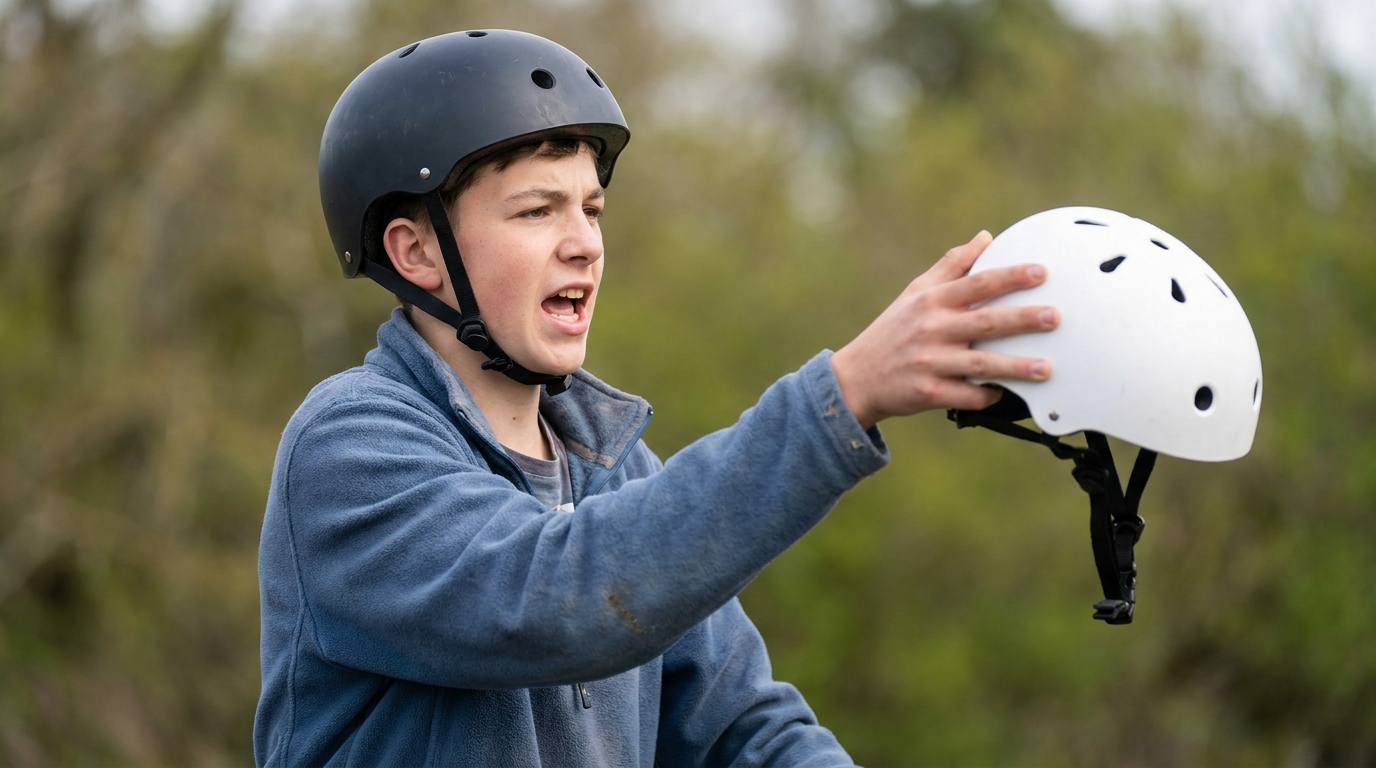
Say this
Hold on - helmet.
Say it once now, while nothing is happening. A sentence your mouth has already said comes out easily when you need it, and nobody argues with it.
9Do it now
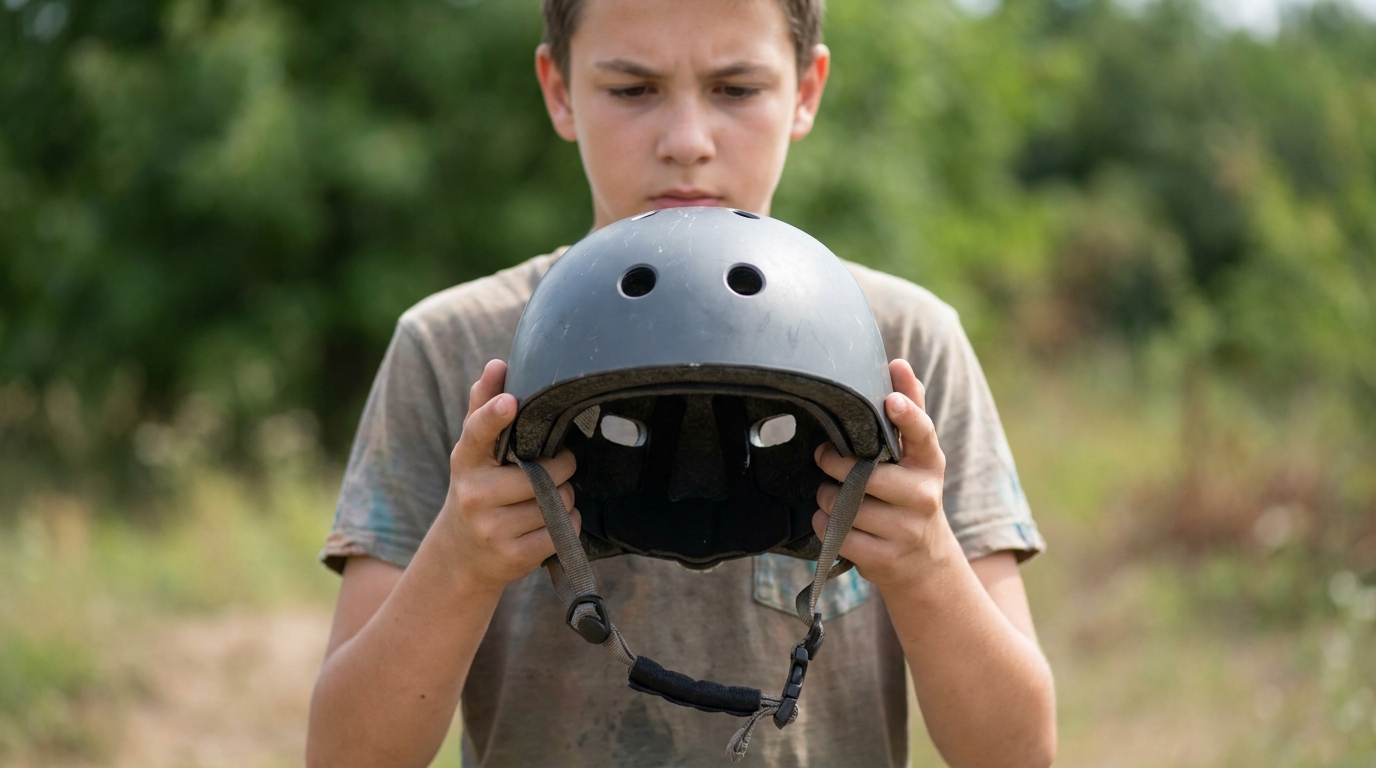
Fit the helmet and check the four things.
Go and get your helmet and put it on. Check the four: level, two fingers above the eyebrows, a V under each ear, one finger under the strap. Then leave it set that way.